Living System
Over more than a year, I designed and orchestrated a live event from end to end - one identity, one experience, held together across every surface and every supplier. No repository. No deploy pipeline. Just the discipline of making a hundred moving parts feel like one thing.
It's the proof I keep coming back to: my way of working doesn't depend on the medium. Systems thinking, brand coherence, experience design - they hold whether the output ships to production or lives in a garden for one day.
A living system isn't one you finish. It's one that takes its real shape in the hands of the people who use it - here, off the screen, exactly as it does on it.
Not product. Not digital. Not communication. A living one - and it held together just the same.
01 - Identity
One identity, everywhere.
Starting from a constraint you don't own, then making every other decision agree with it. That's most of the job on the platform too.
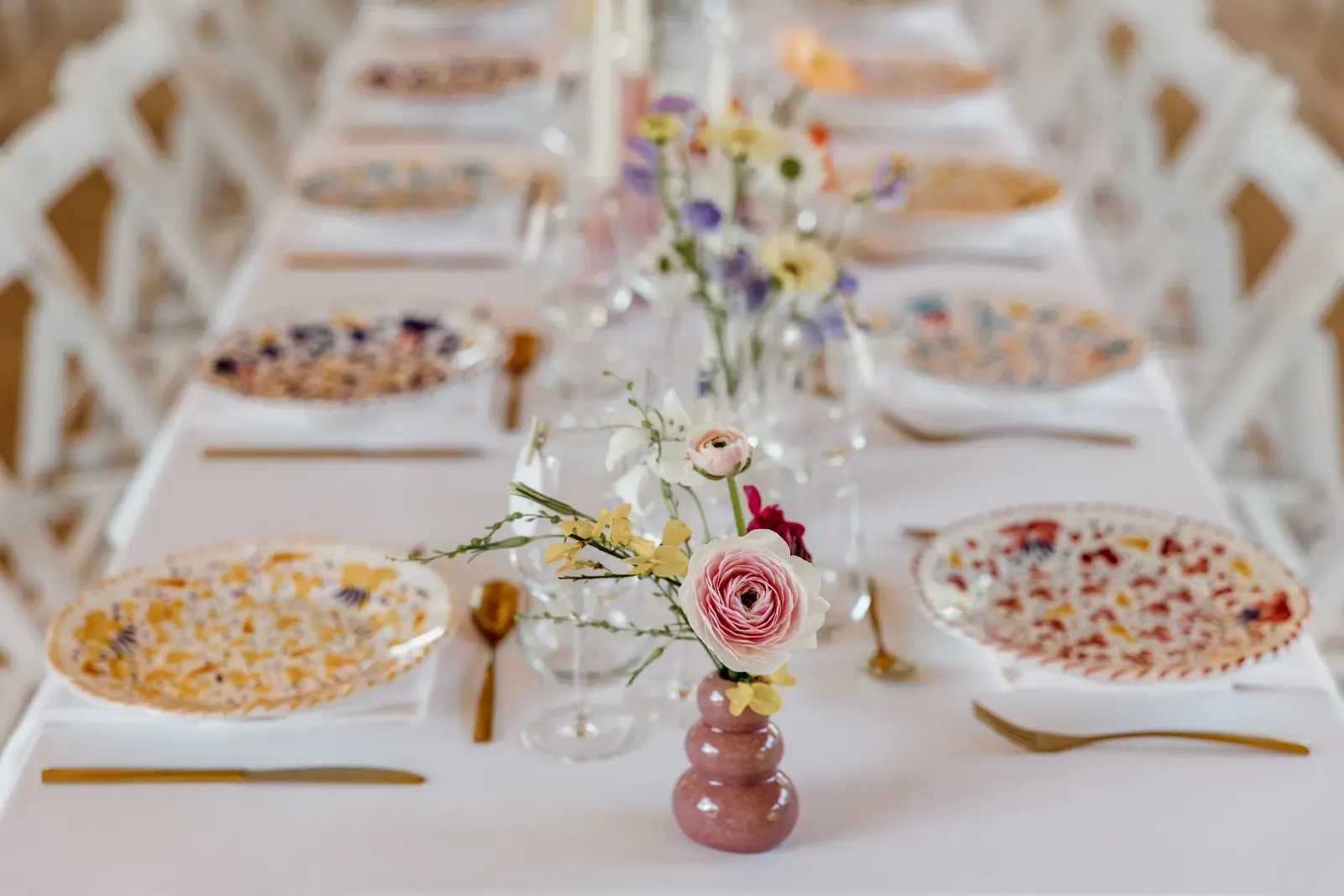
The whole thing started with two objects. Not a moodboard and not a colour study - two rented pieces we could actually put in the space. The Popolo plate: scalloped rim, hand-painted florals, cobalt and ochre. The Roly Poly armchair: fat legs, round shoulders, no straight line anywhere. One gave the pattern language. The other gave the posture.
Five words came out of them, written down before anything was drawn: shapes, type, colors, conviviality and playfulness. Then systematised end to end across the whole experience, from the first envelope to the last jar label.
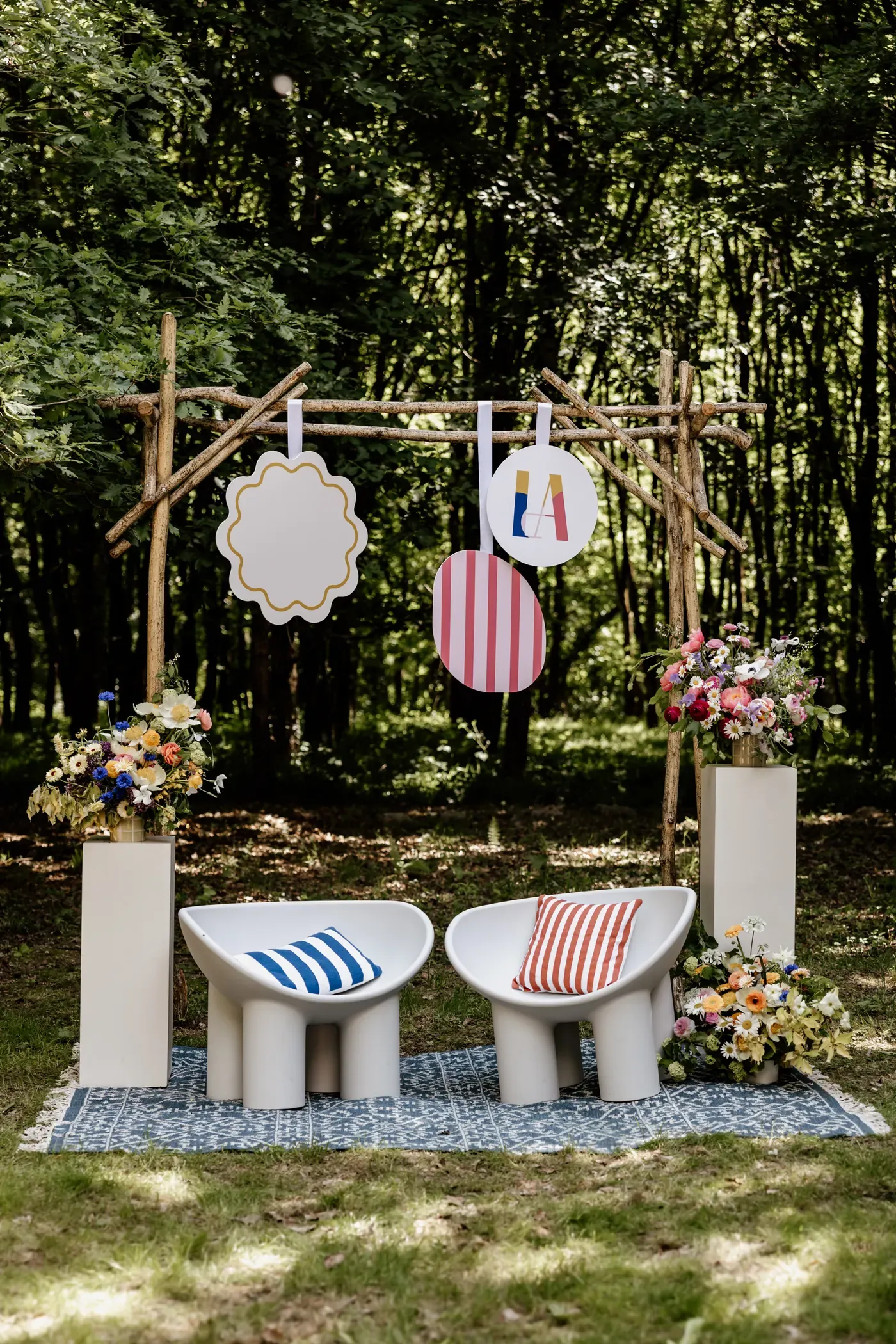
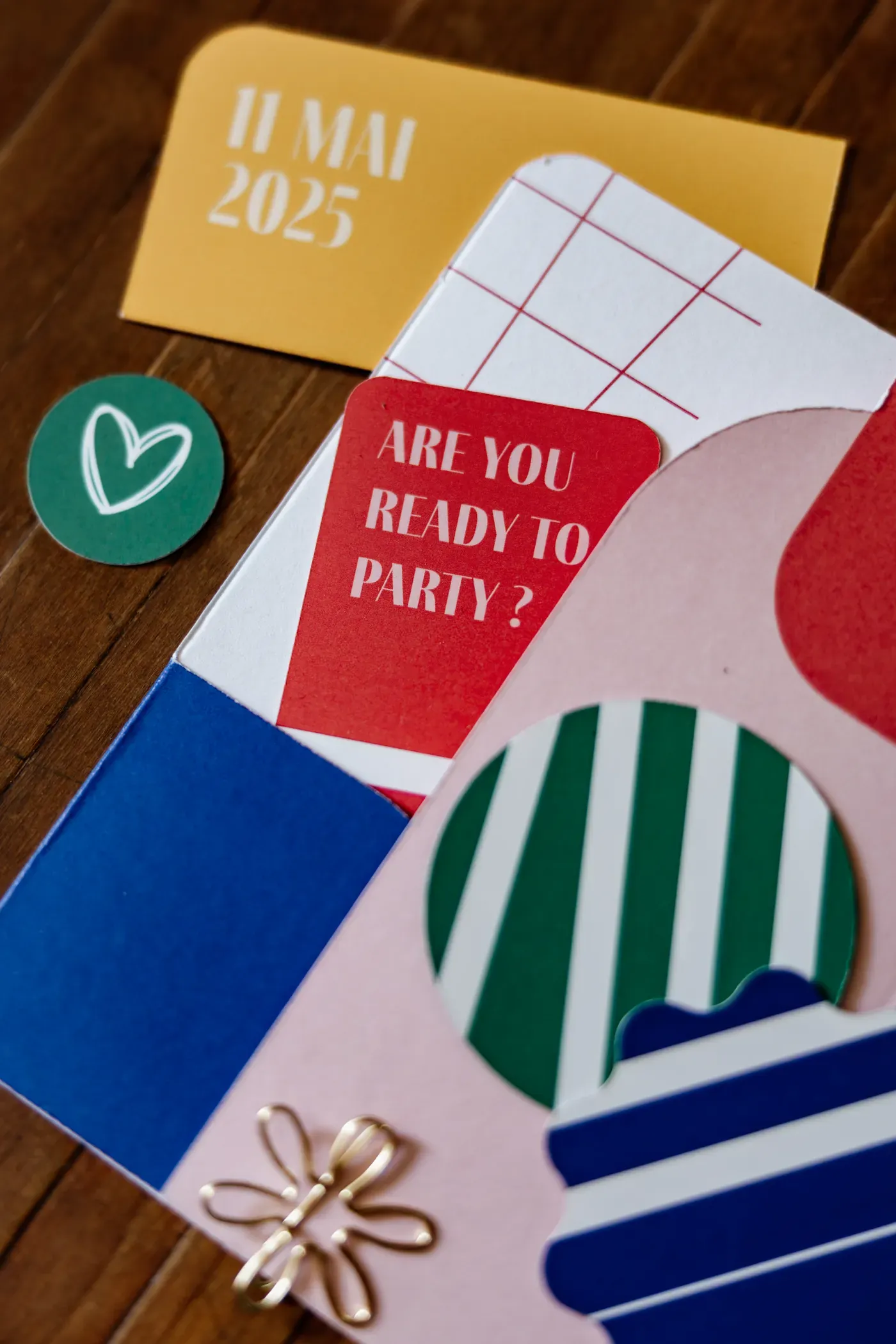
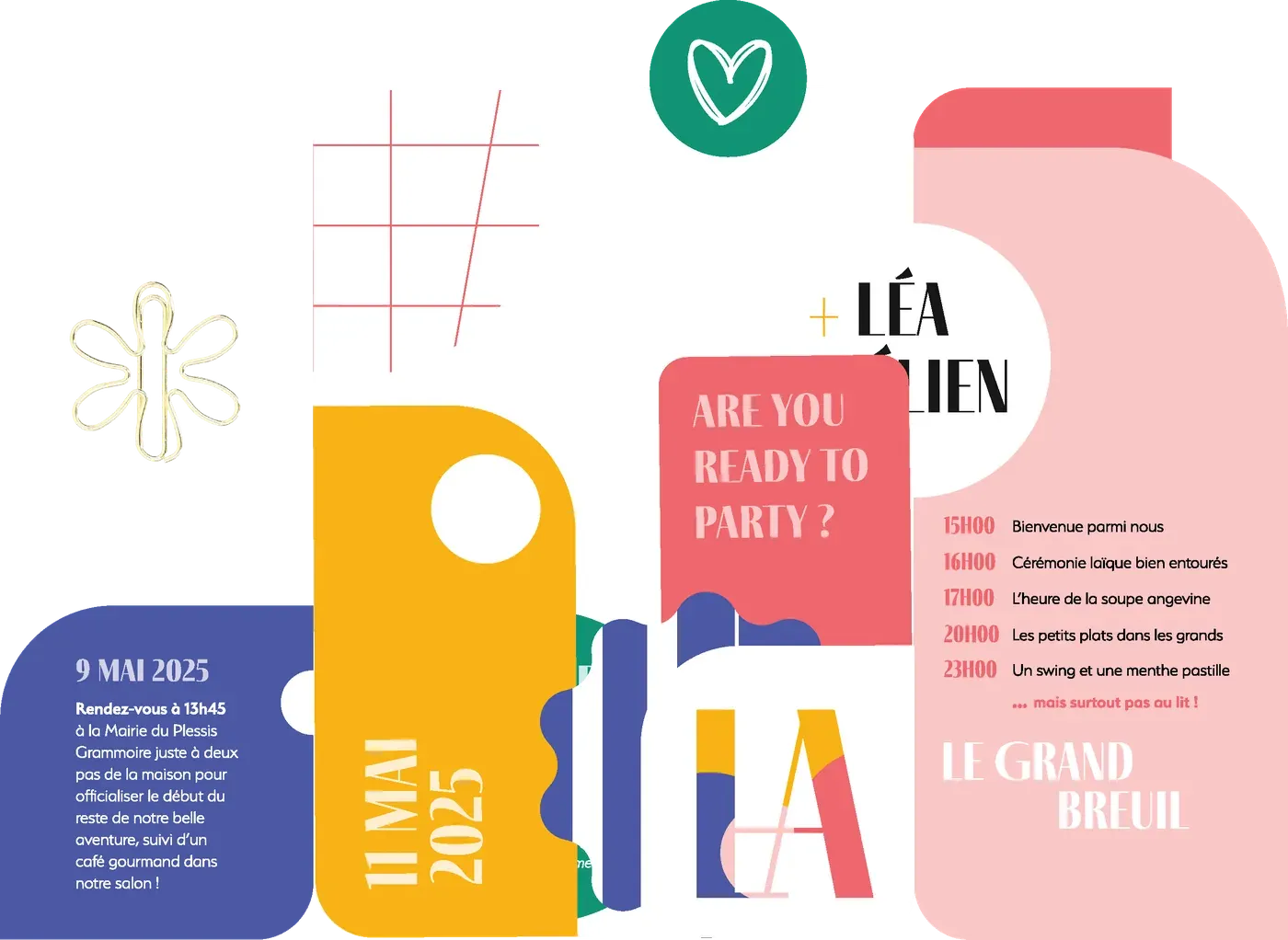
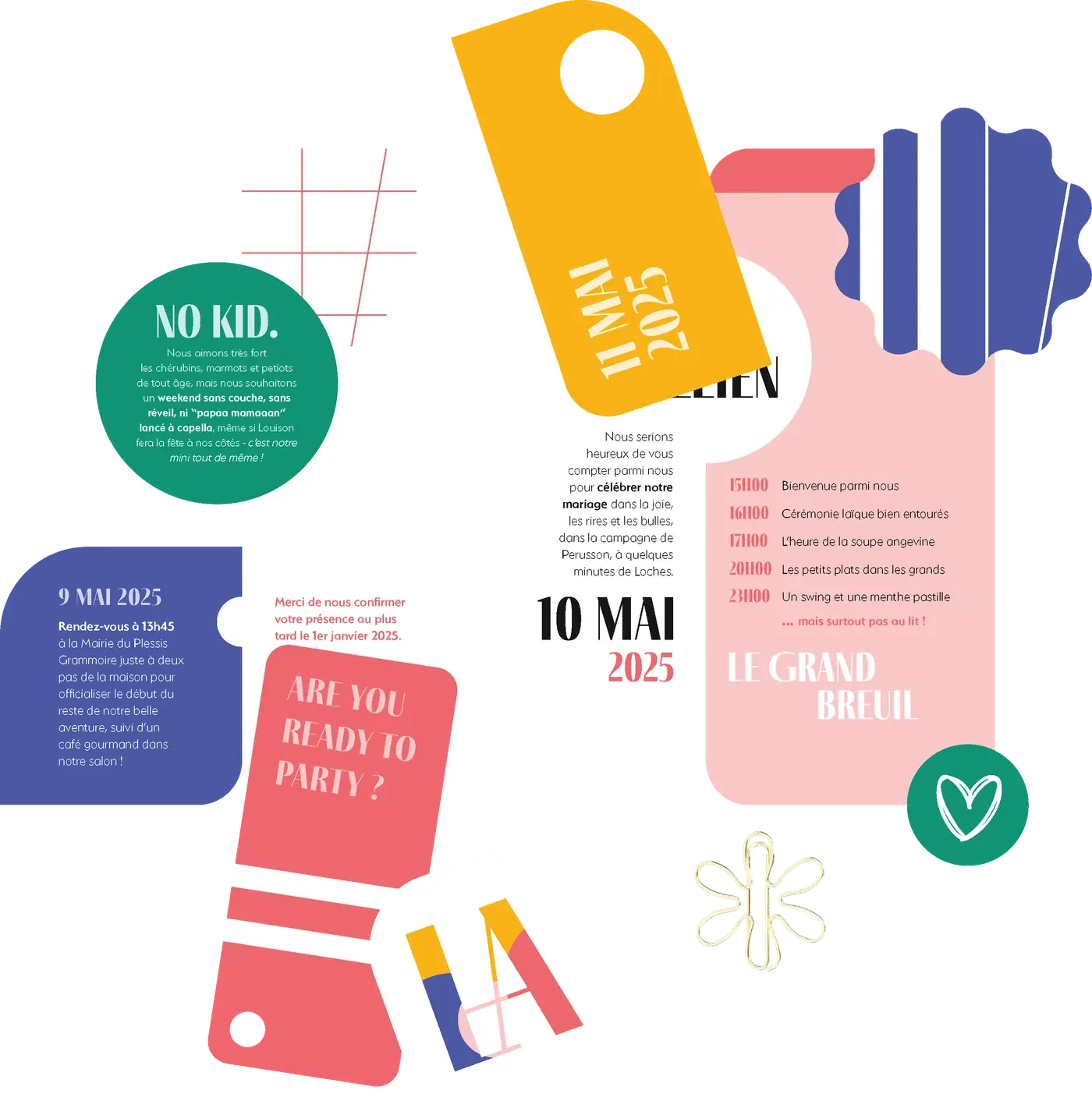
The scallop became the die-cut on the stationery and the discs hung from the arch. The chair's soft geometry became the arched panels on the signage. The palette came straight off the glaze. And the last two - conviviality and playfulness, the ones that aren't visual properties at all - are the reason the day ended up with an escape game in it.
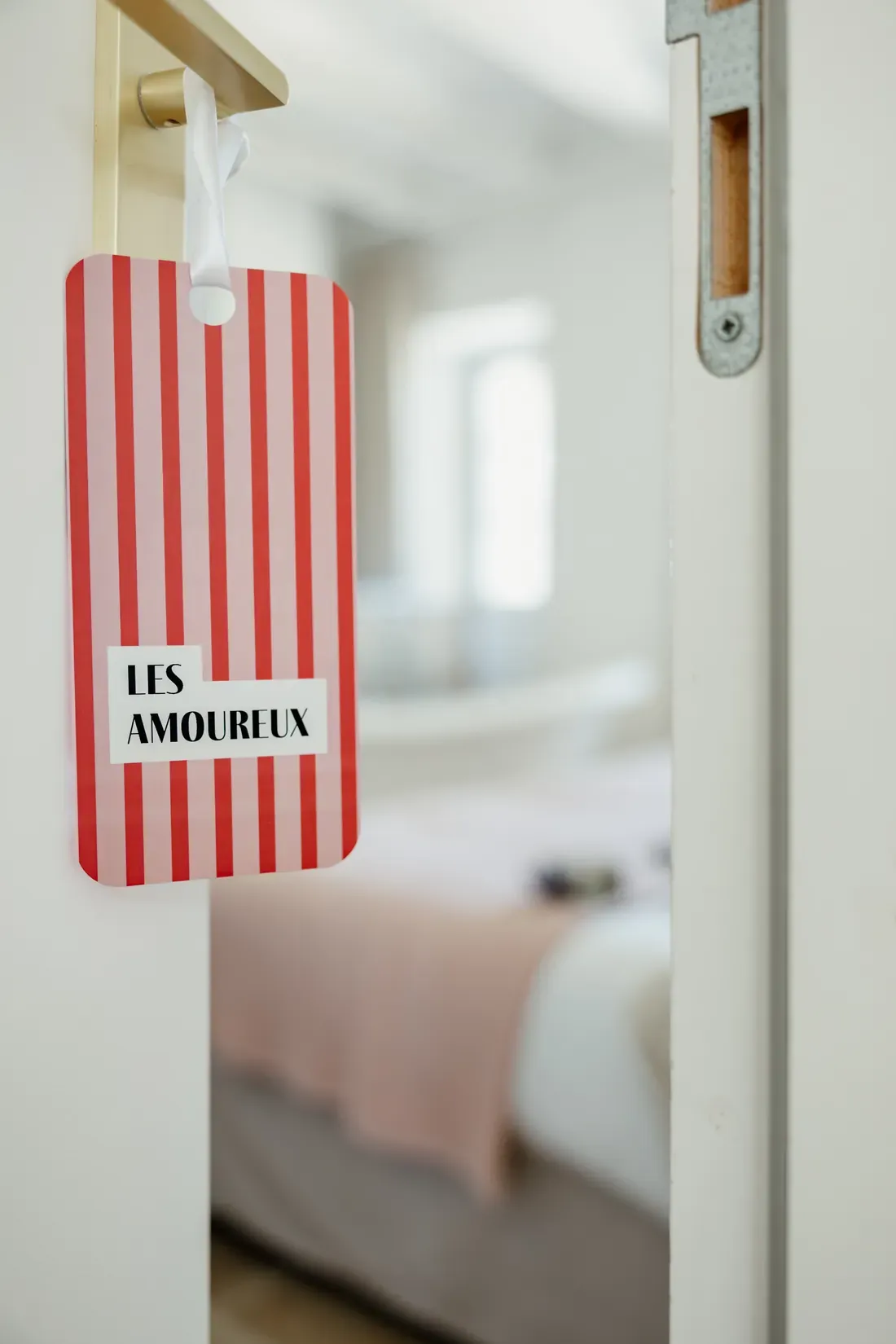
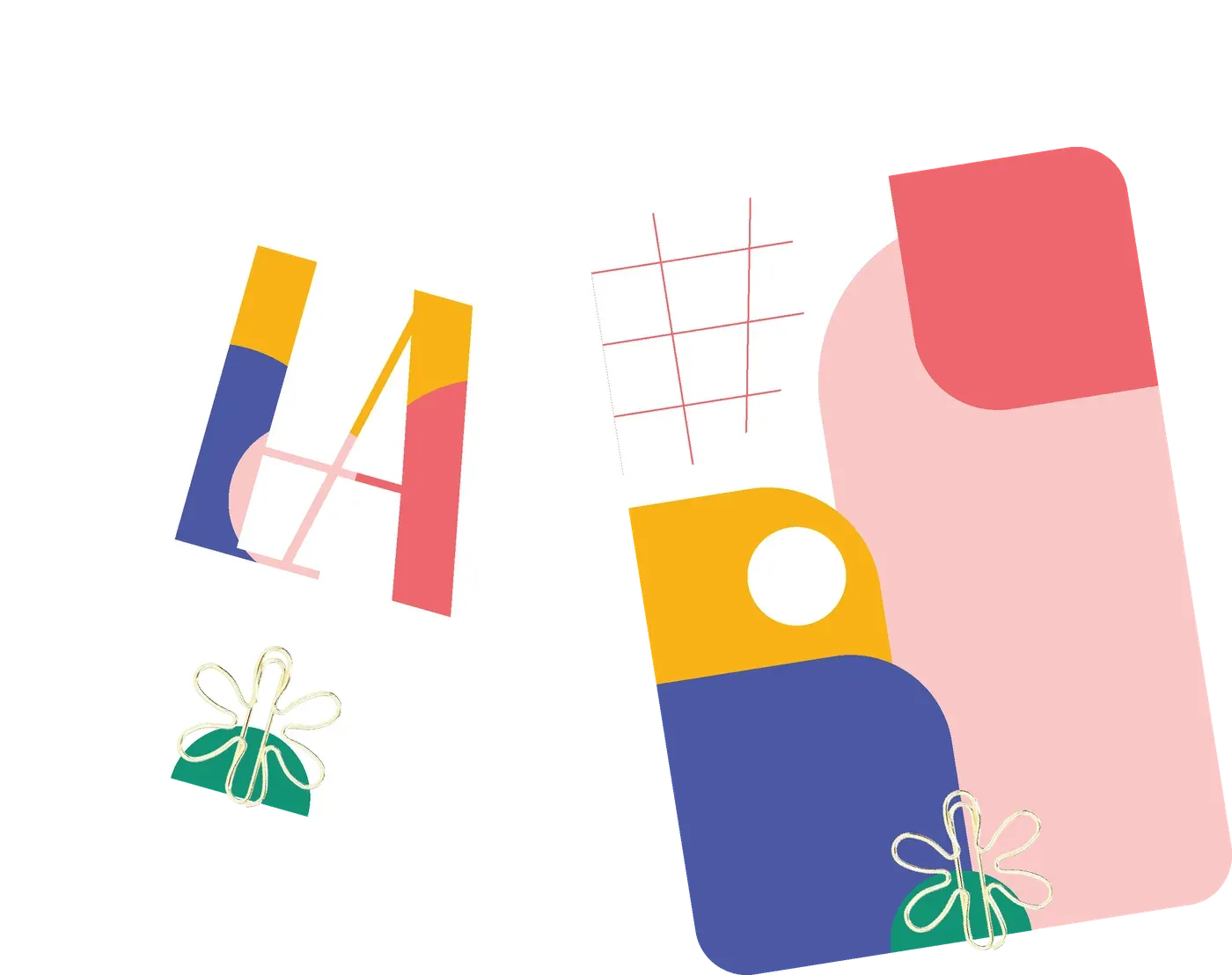
A full visual identity, declined across every physical surface the day would touch - and even before it, animating the pre-event through a WhatsApp community. A monogram, a palette, signage, stationery, room tags, table names, favours, packaging. Dozens of touchpoints, one language - the same coherence I hold across 45+ digital products, applied to paper, fabric, metal and wood.
Shapes
- Circle
- Square
- Star
Three cut-outs, taken off the plate's rim and the chair's silhouette. Every badge, tag, disc and die-cut in the identity is one of these three.
Colors
- Vert
#008C68 - Bleu
#455192 - Rouge
#F05863 - Jaune
#F7A800 - Rose
#FDC1BD
Type
Aa
Aa
Nothing was left to chance, and nothing drifted. One identity, fifty-plus surfaces, zero inconsistency.
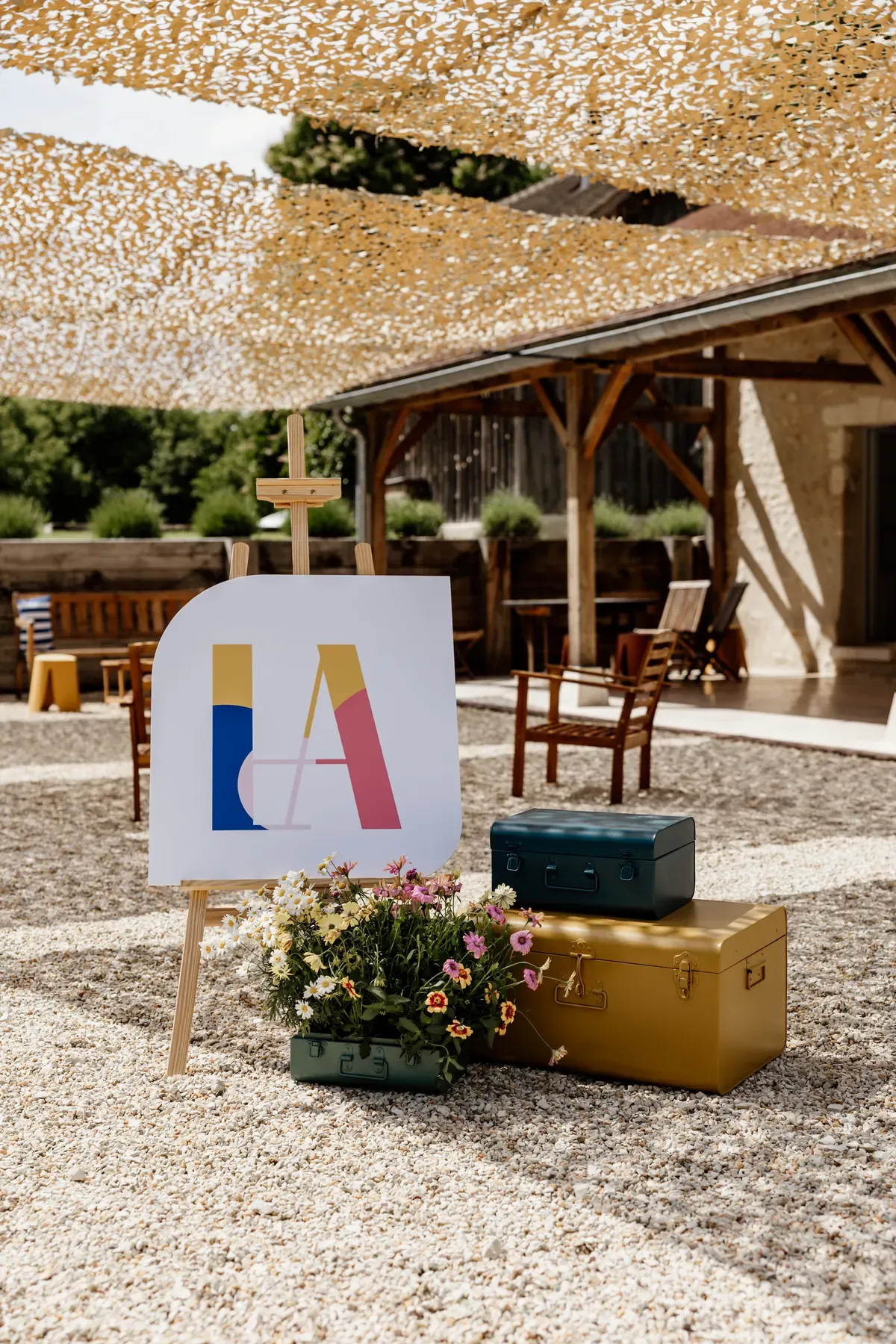
Signage 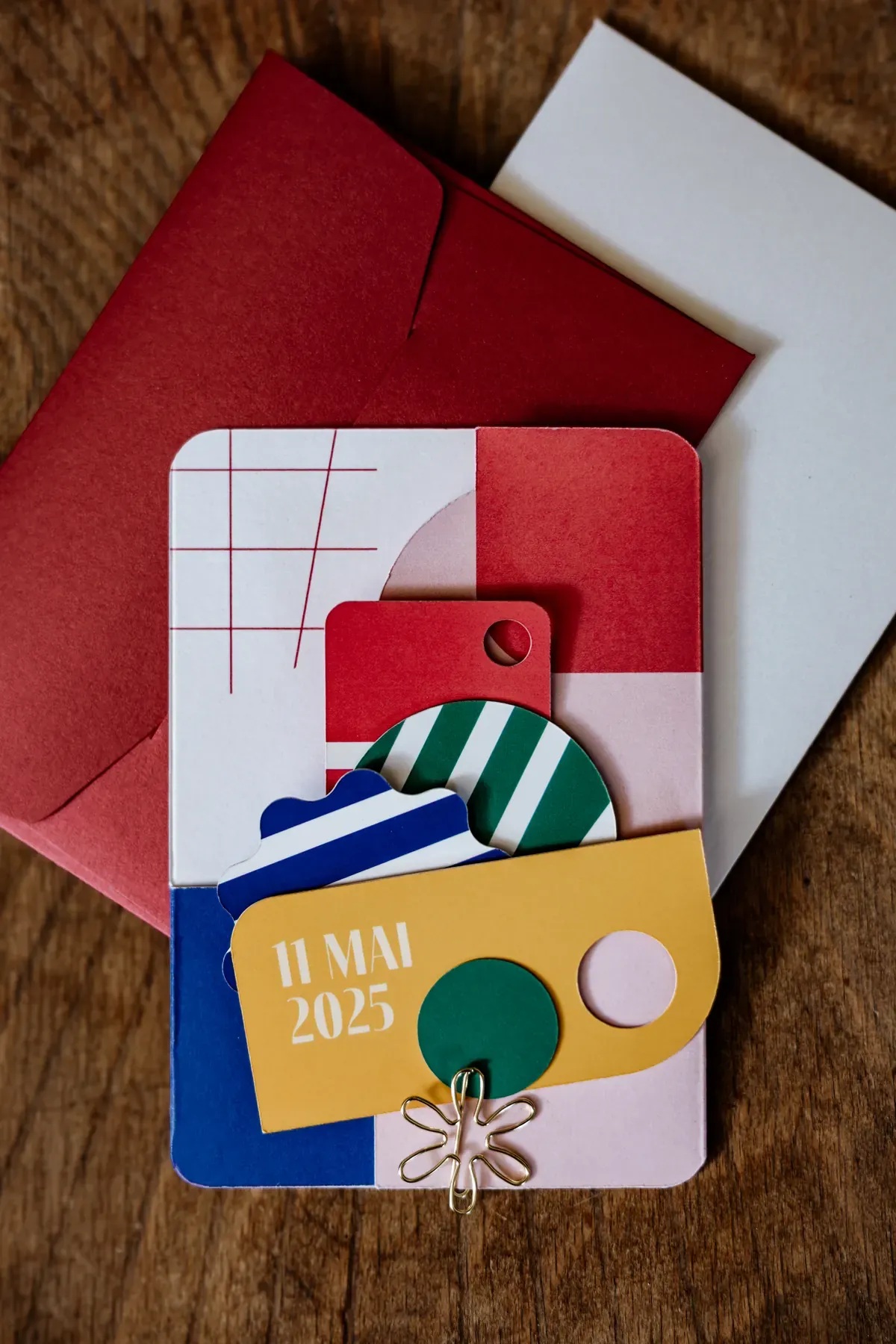
Stationery 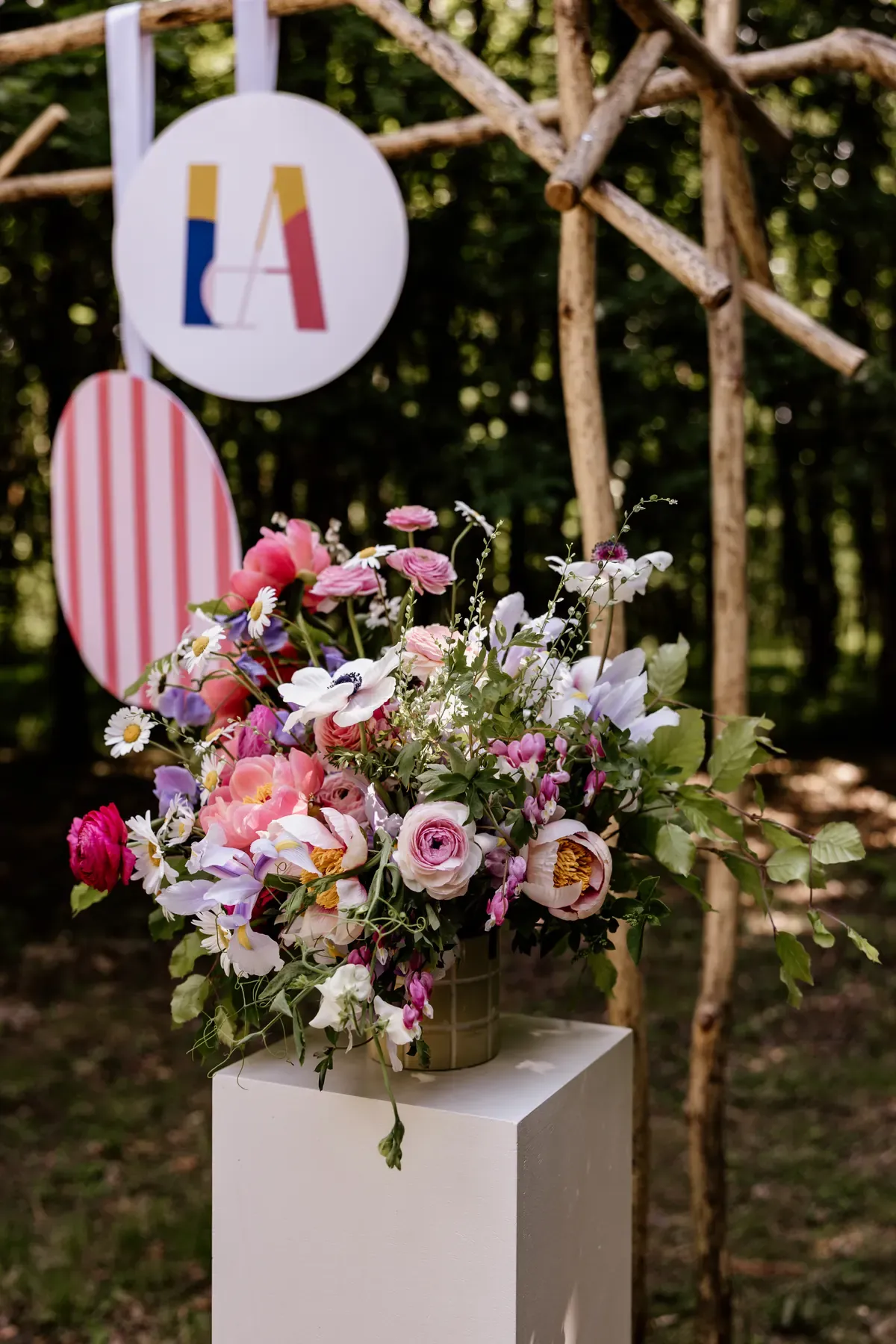
Scenography 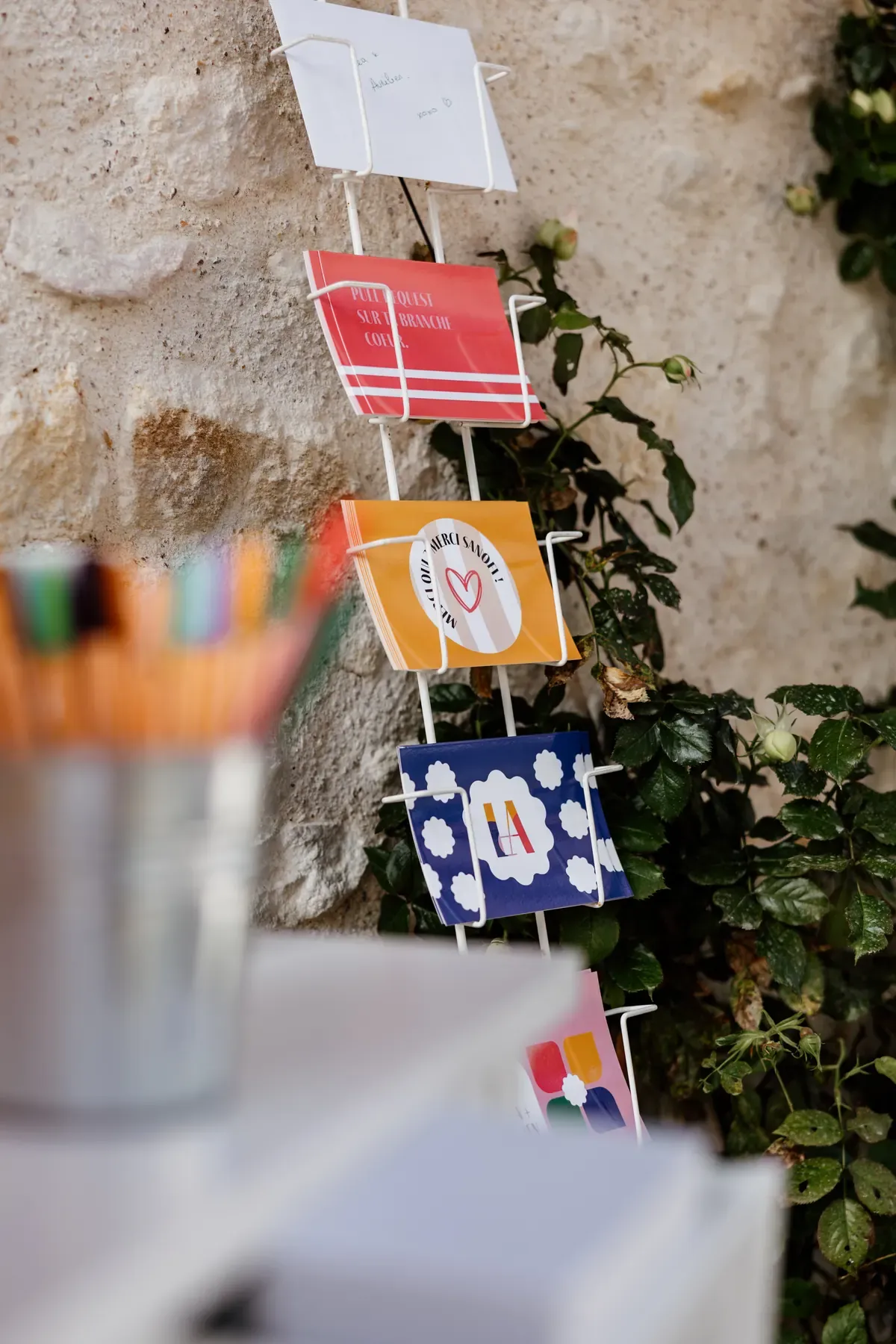
Message cards 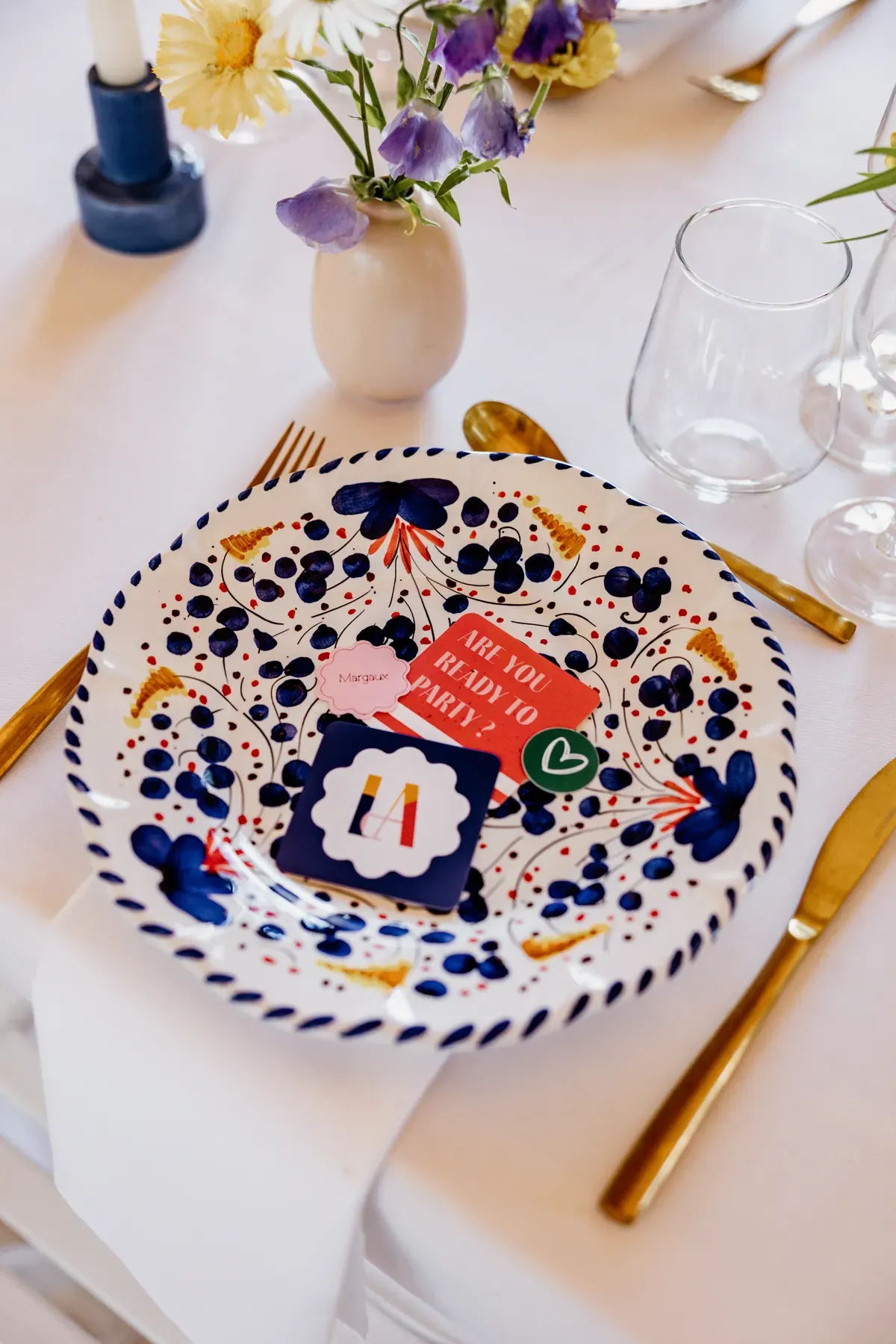
Table setting 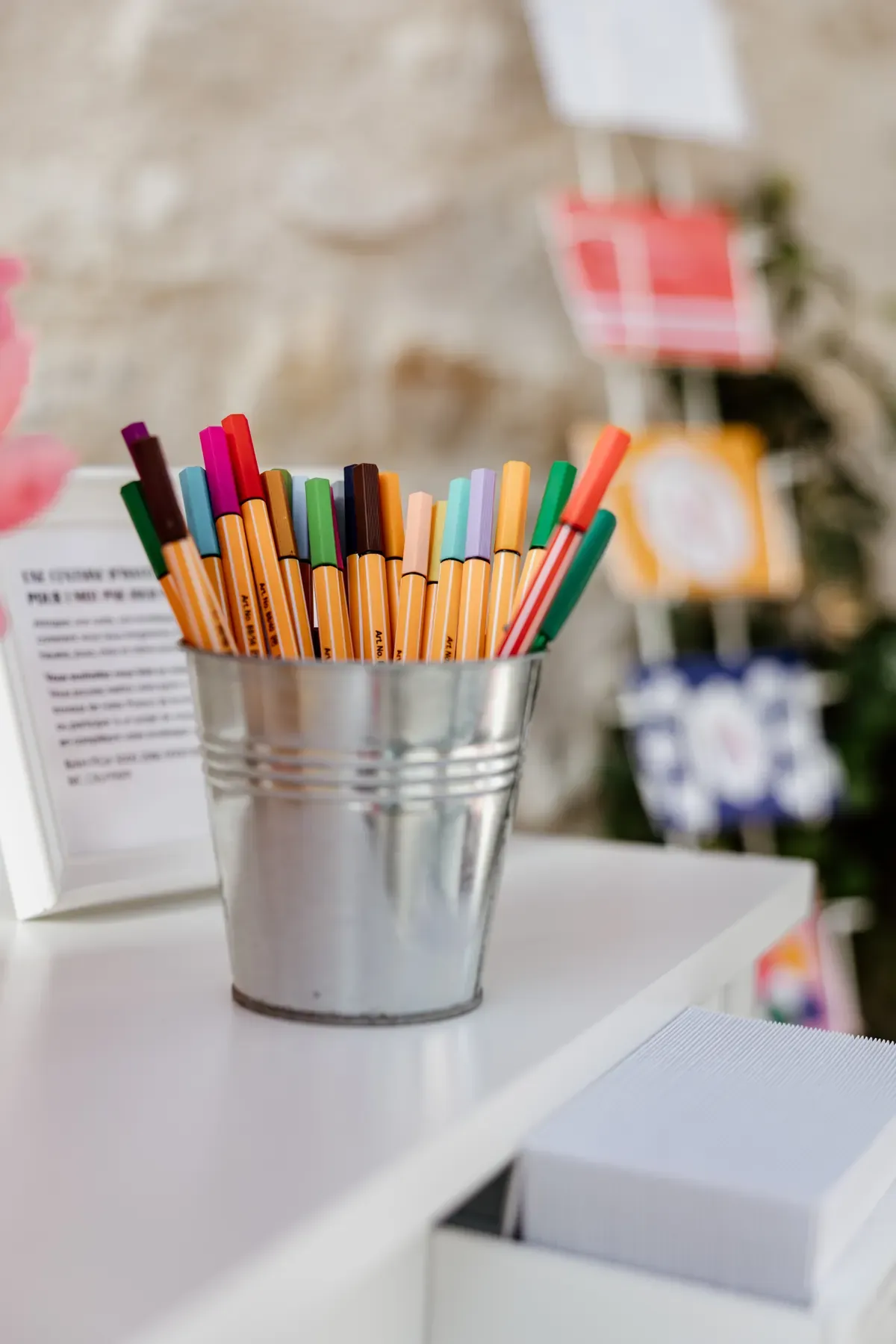
Writing desk 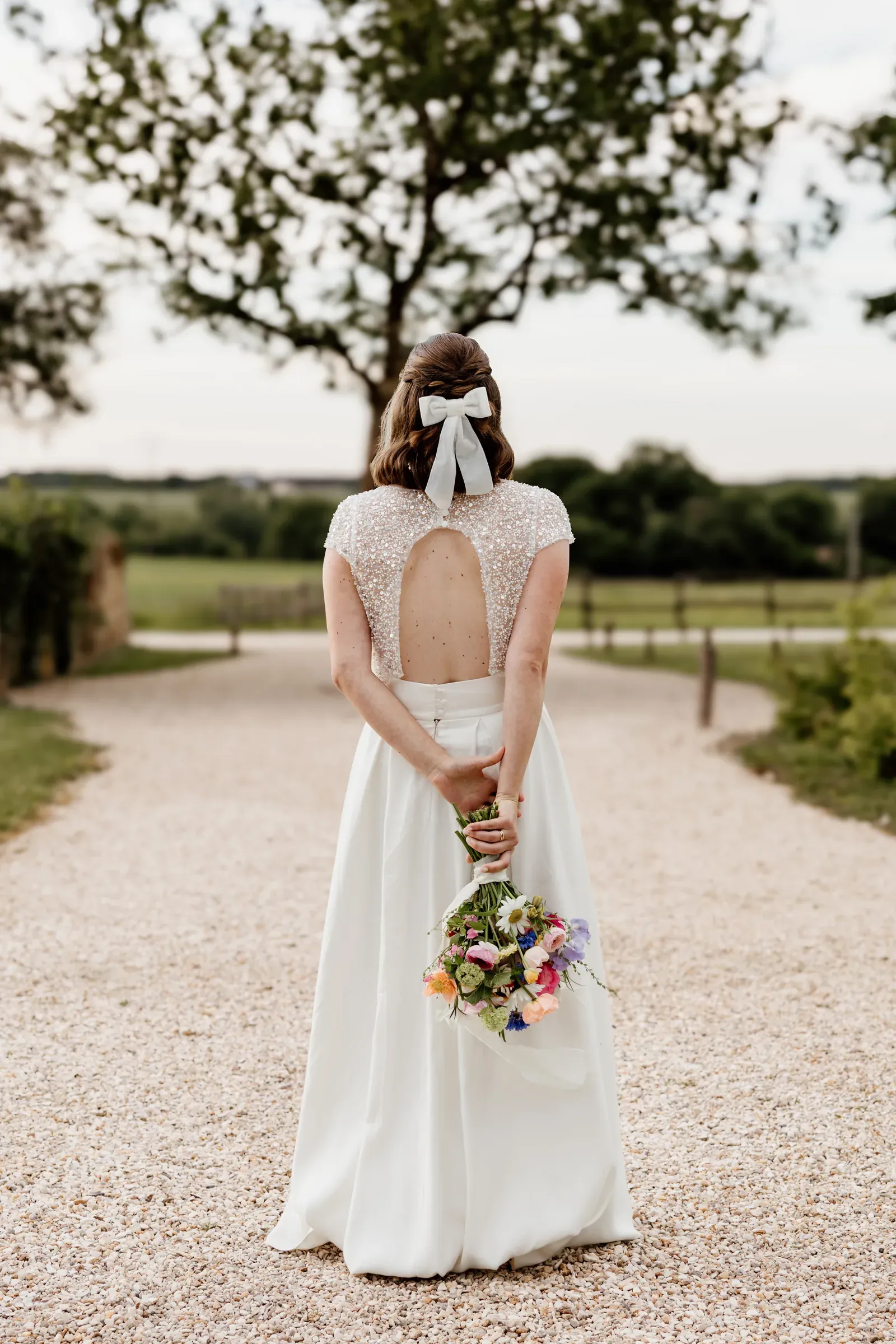
Dresscode 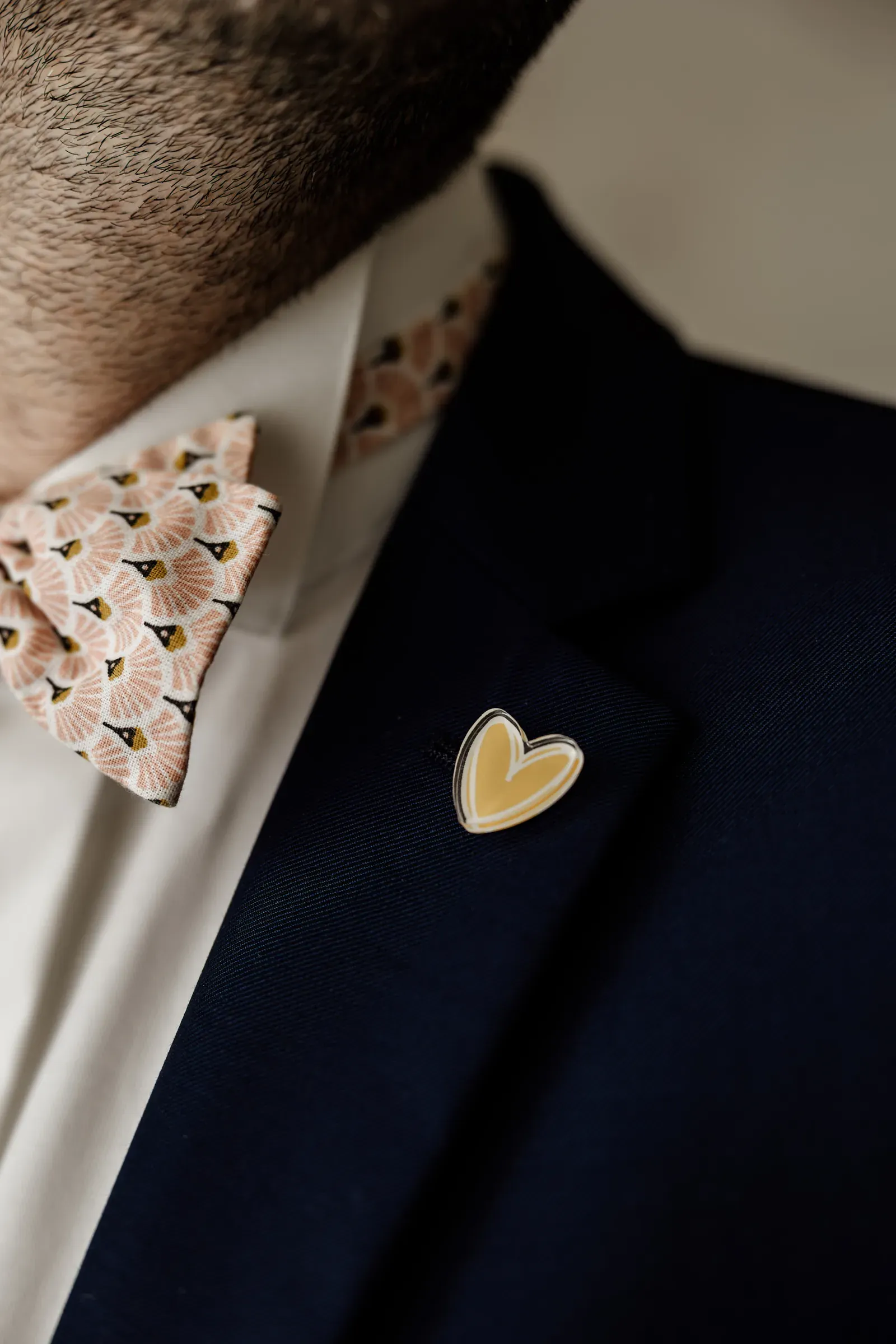
Guest gift 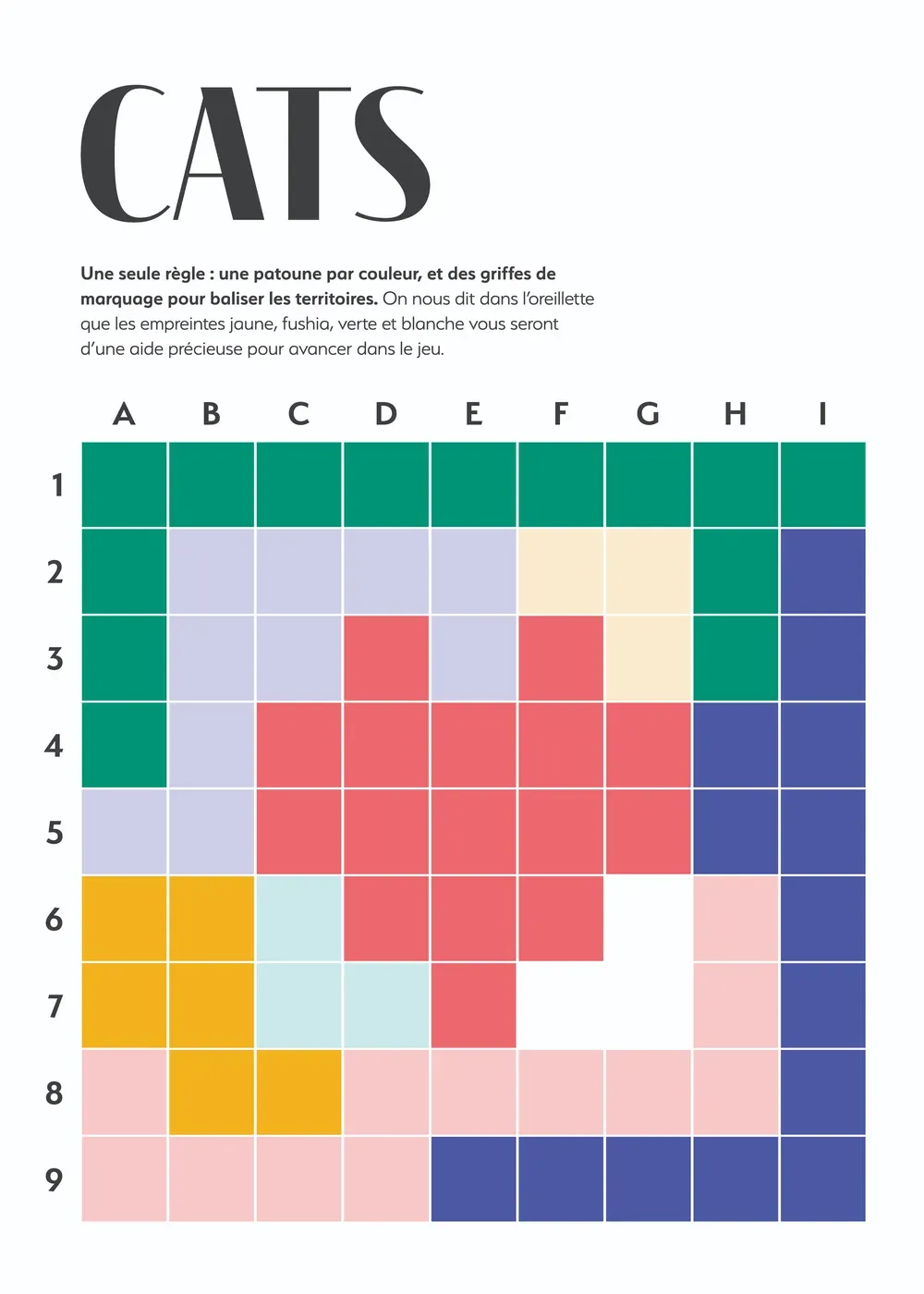
Collaborative game
The test was the boring surfaces.
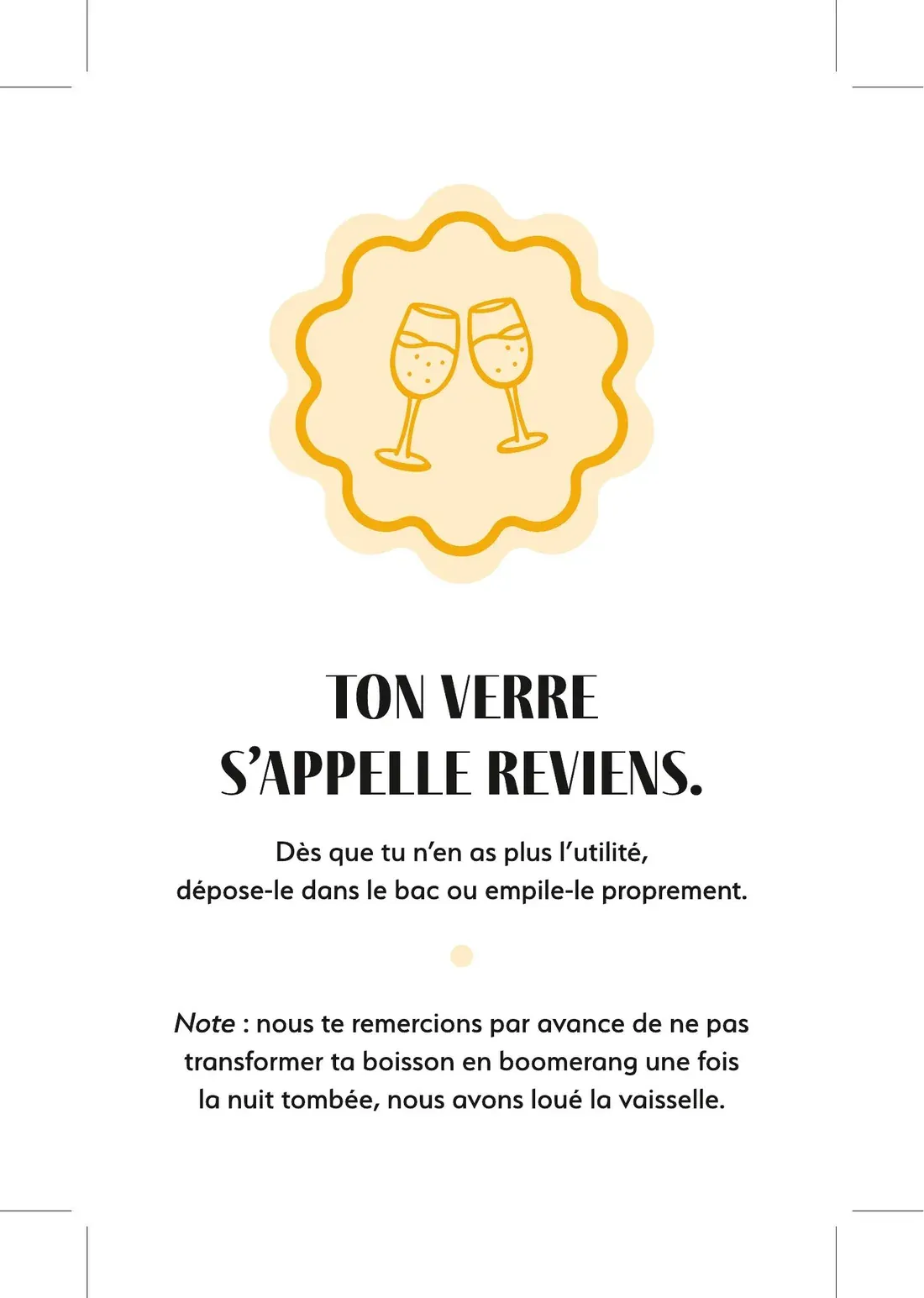
Anyone can be charming on an invitation. The proof is on the signage nobody is meant to enjoy - where to leave your glass, welcome signage to your room to share care. Same display face, same stripes, same jokes.
That's where conviviality and playfulness stopped being words on a moodboard and became a rule I had to keep, on the two hundredth decision as much as the first.
02 - Staging
Space, staged.
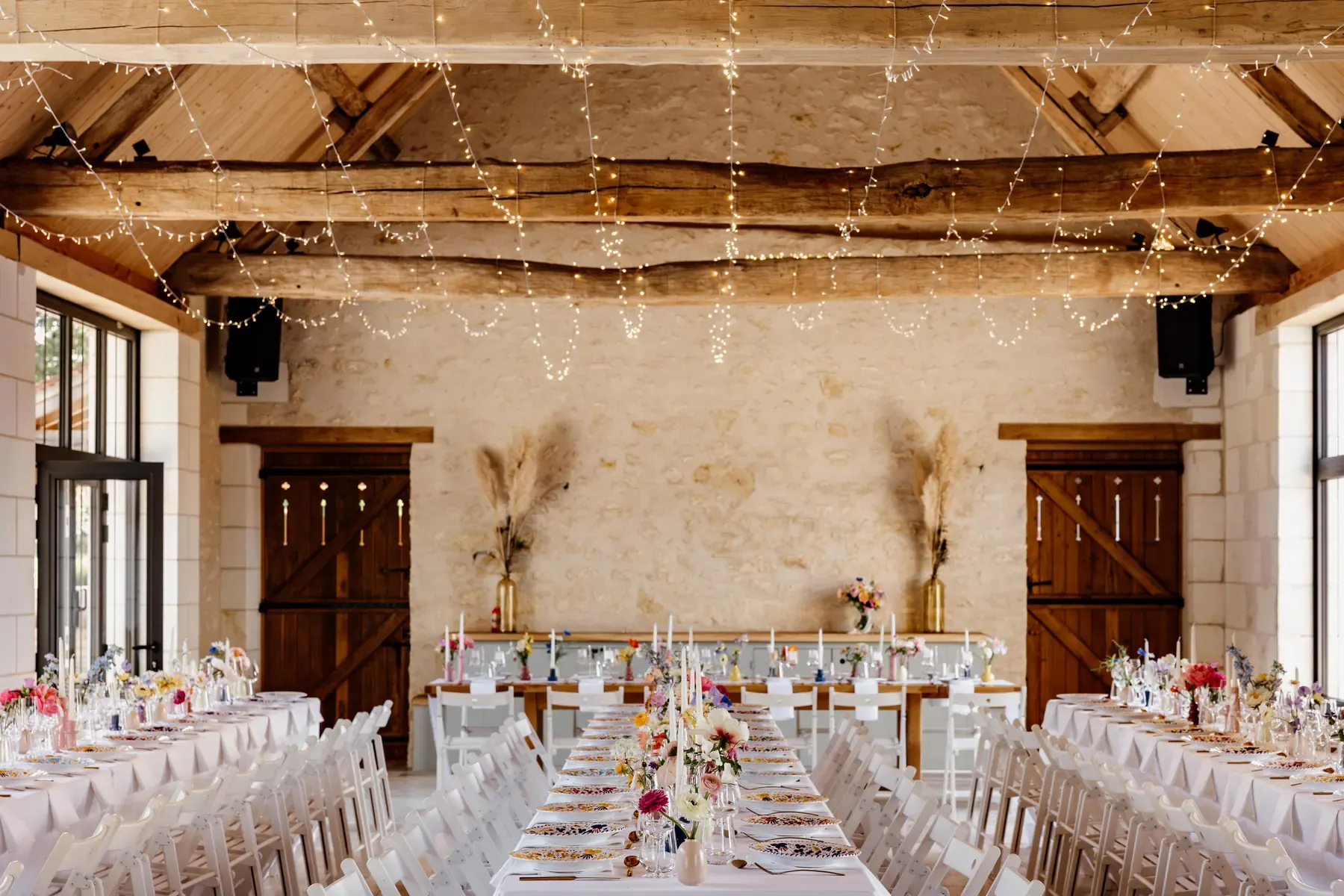
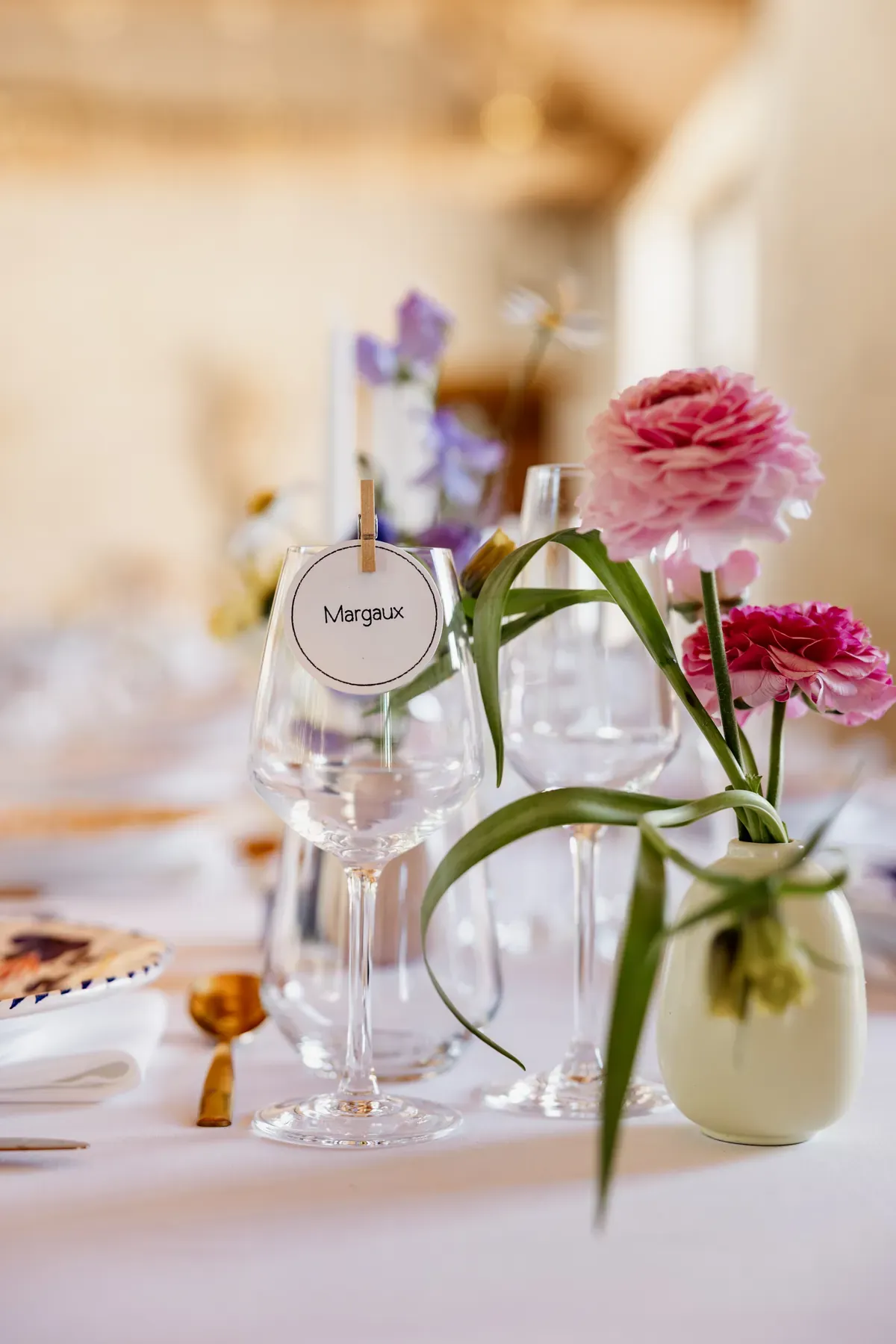
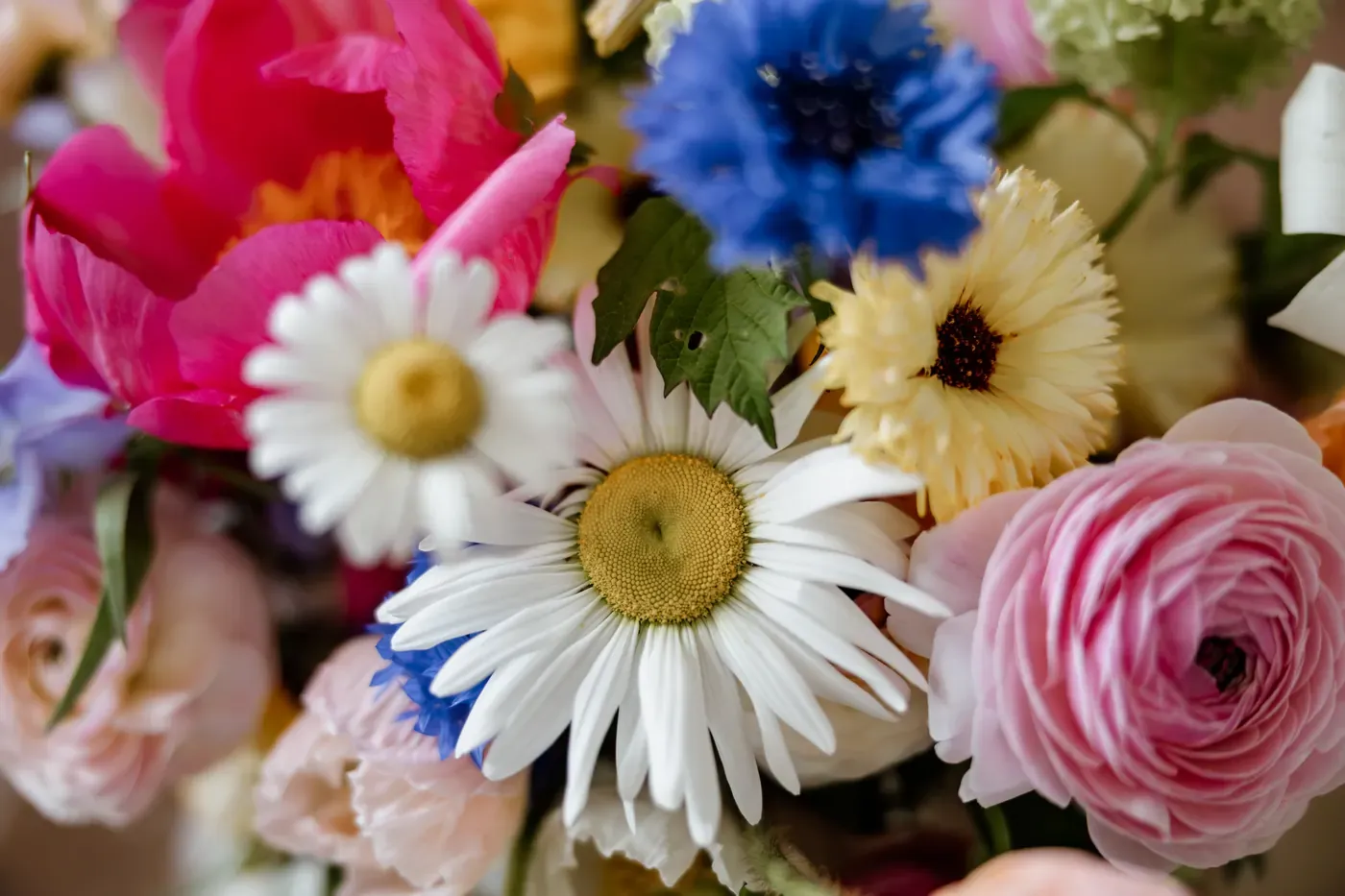
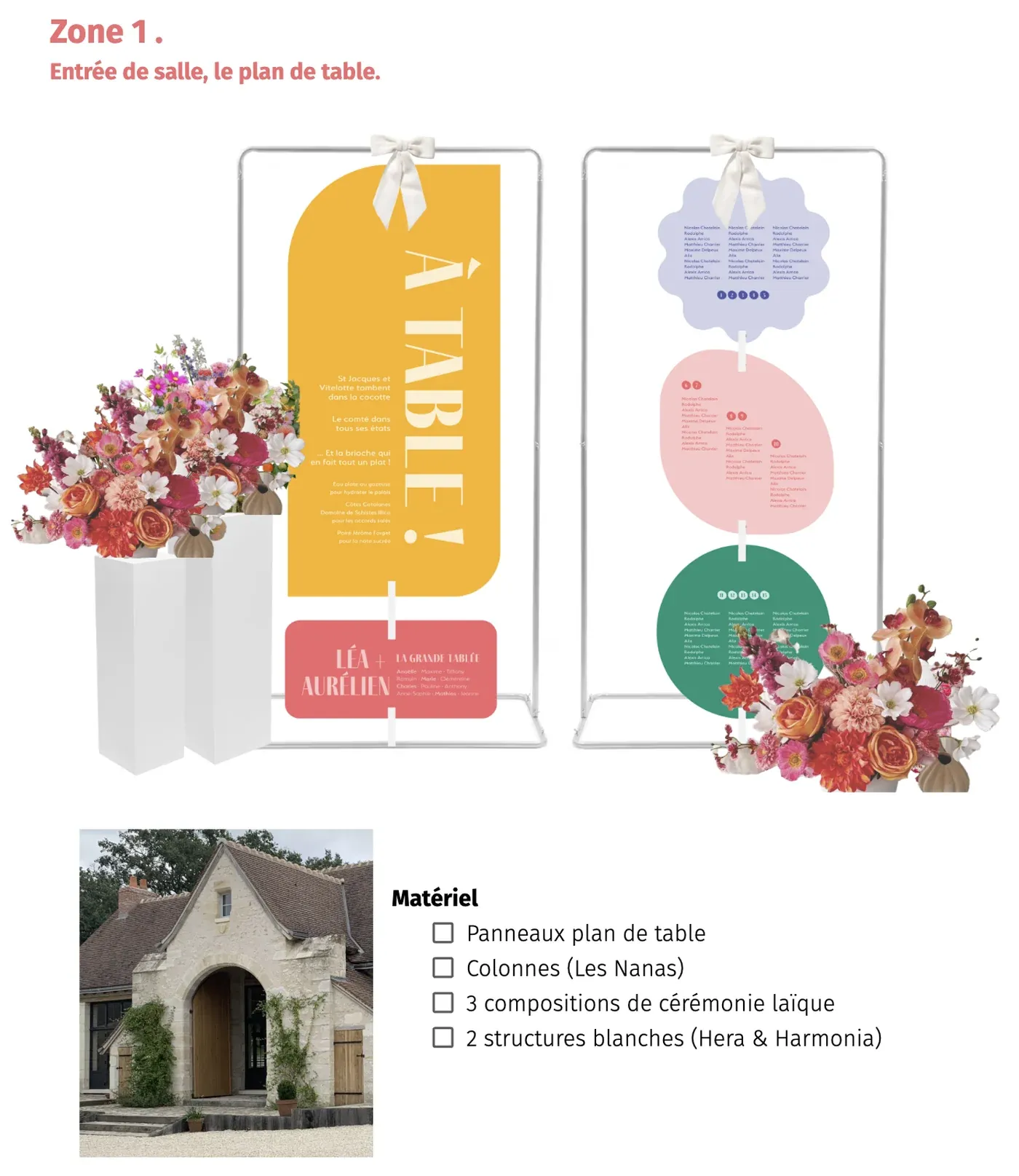
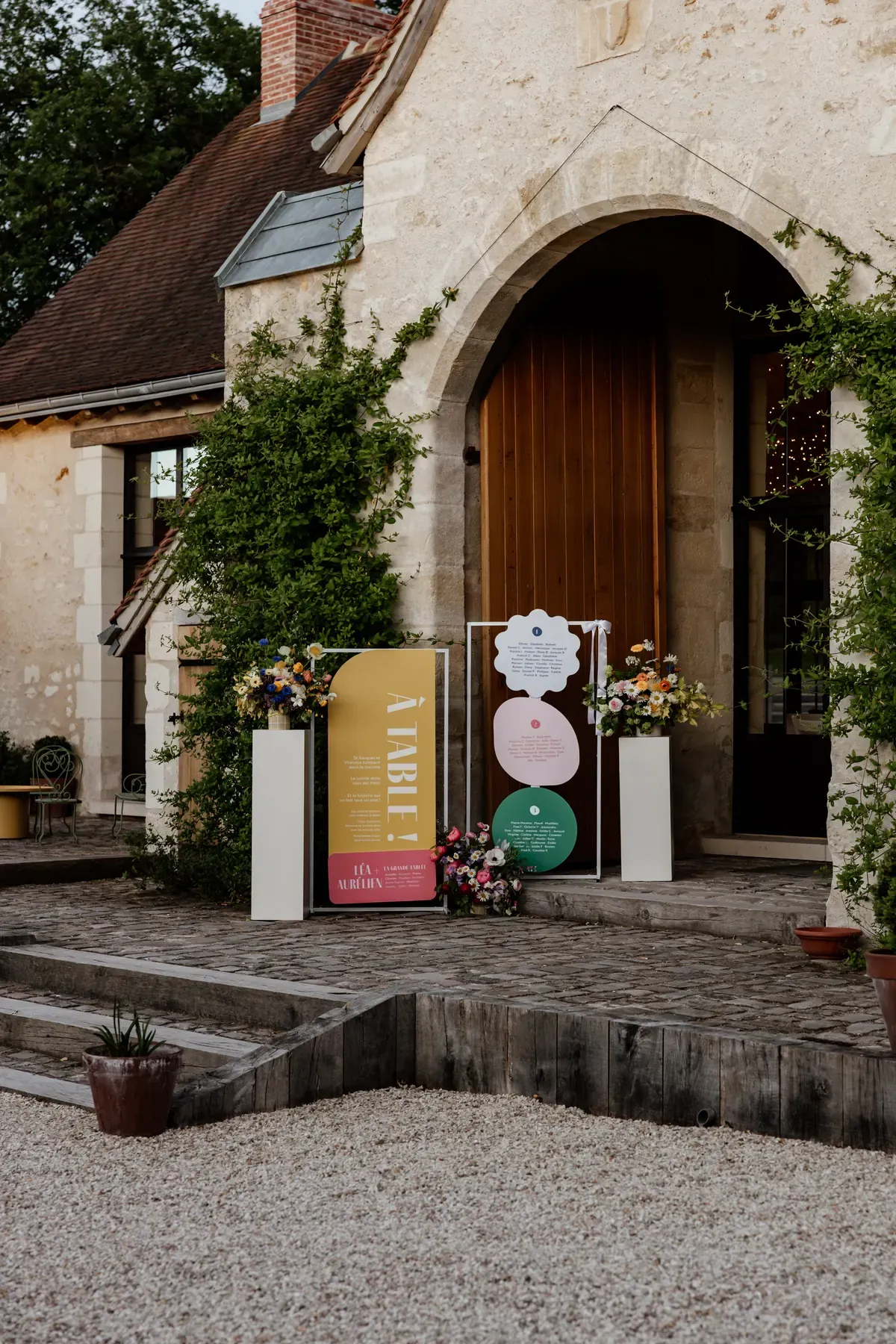
An implantation plan for the day, then the scenography that brought it to life: the arch, the seating, the floral pedestals, the palette carried into every corner of the space.
The system on paper, and the system in the world - the same jump from specification to production I run on the platform, made physical.
Specified
Built
03 - The centrepiece
A game, by design.
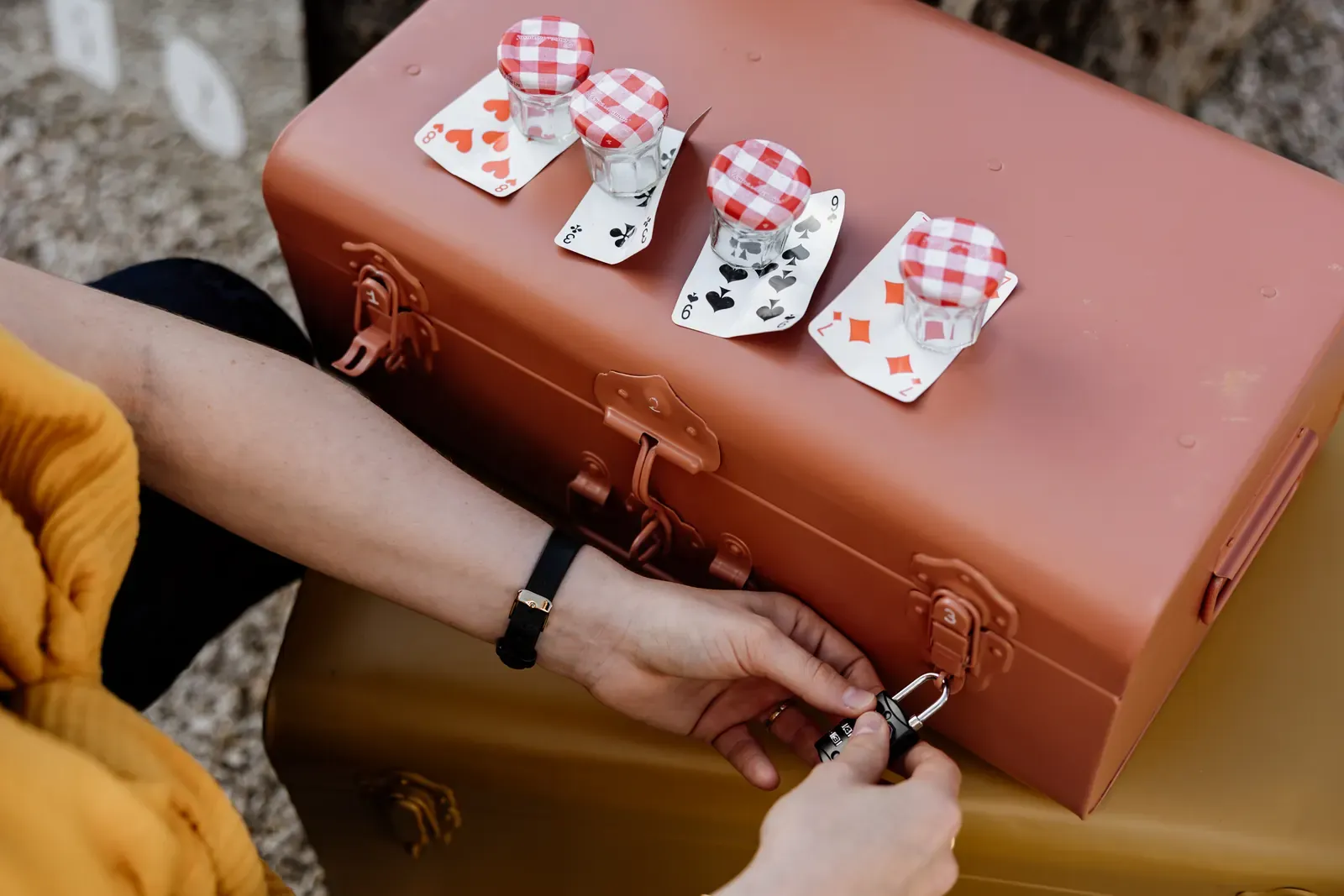
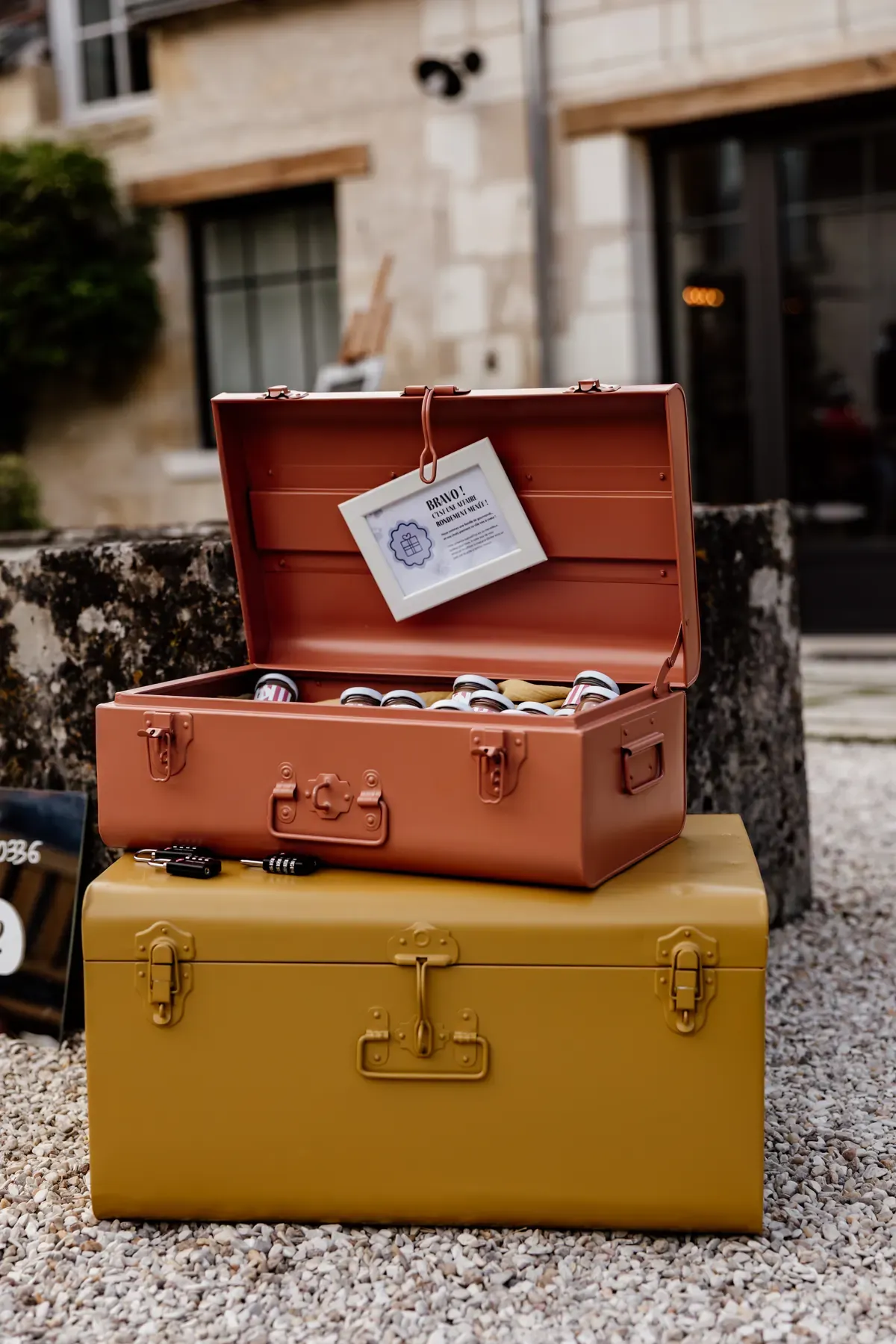
An escape game, designed from zero - rules, clues, progression, reward. A locked trunk, a sequence to crack, a payoff at the end. Experience design in its purest form: a system of constraints and steps that has to feel effortless while being tightly engineered underneath.
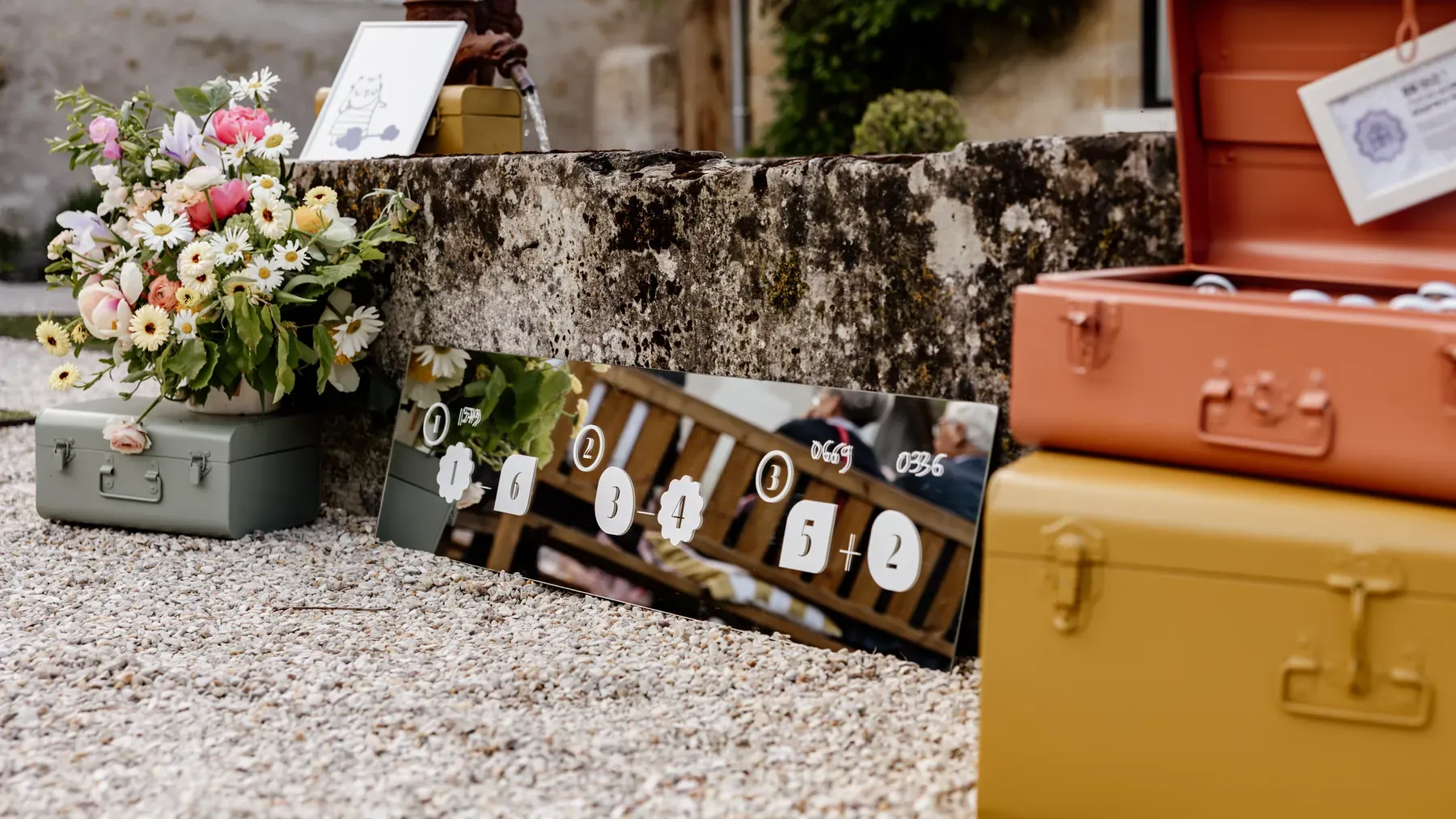
Six riddles, six different mechanics for six essential clues to unlock one final chest, all together. Each had to be learnable in thirty seconds, solvable by people holding a drink, and unmistakably part of the same day as the invitation and the table.
01The constraint
A locked trunk, a combination, and clues scattered across the day.
02The crack
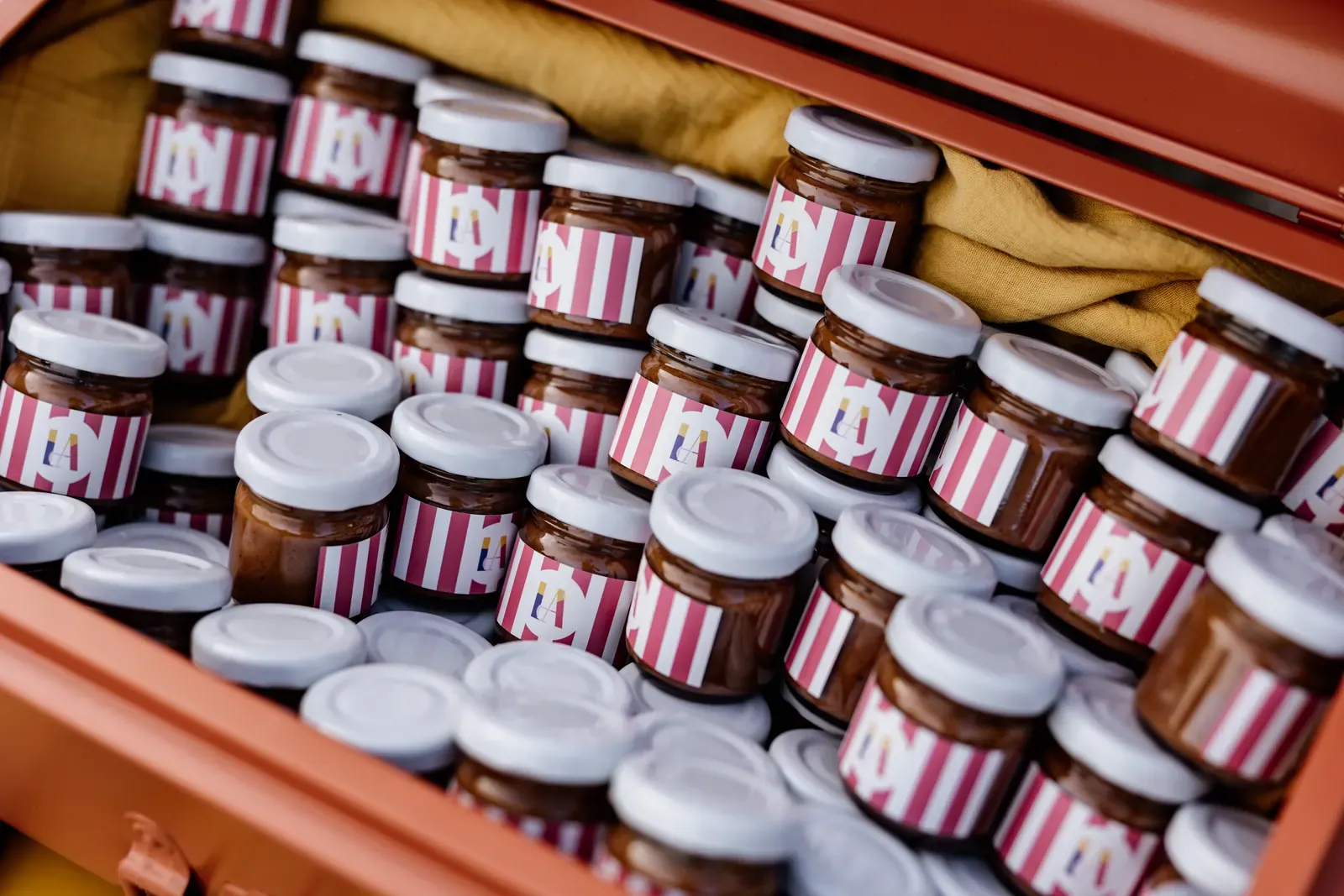
Progression built so the last step feels earned, not handed over.
03The payoff
The reward carries the identity too. The system runs to the last object.
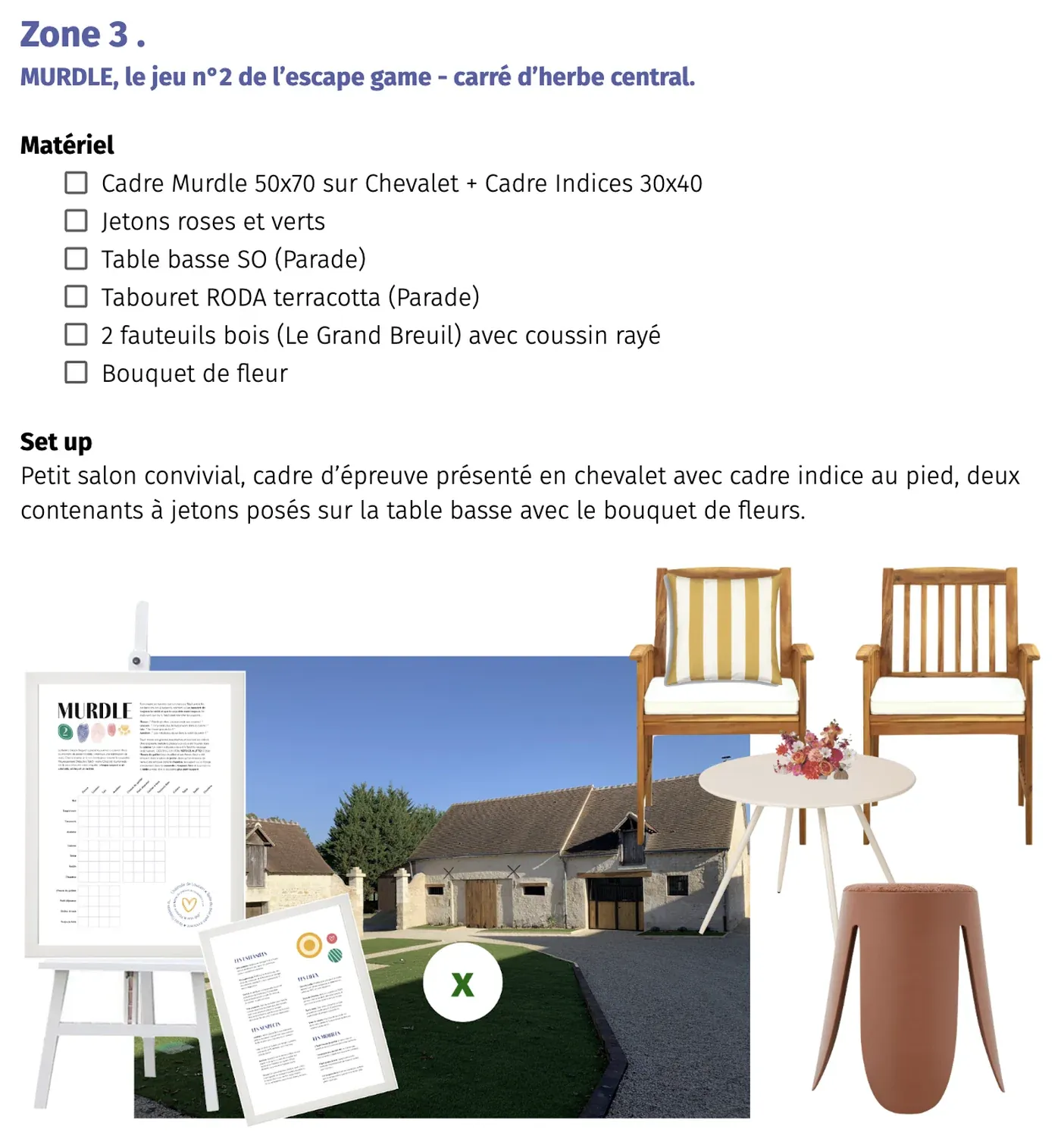
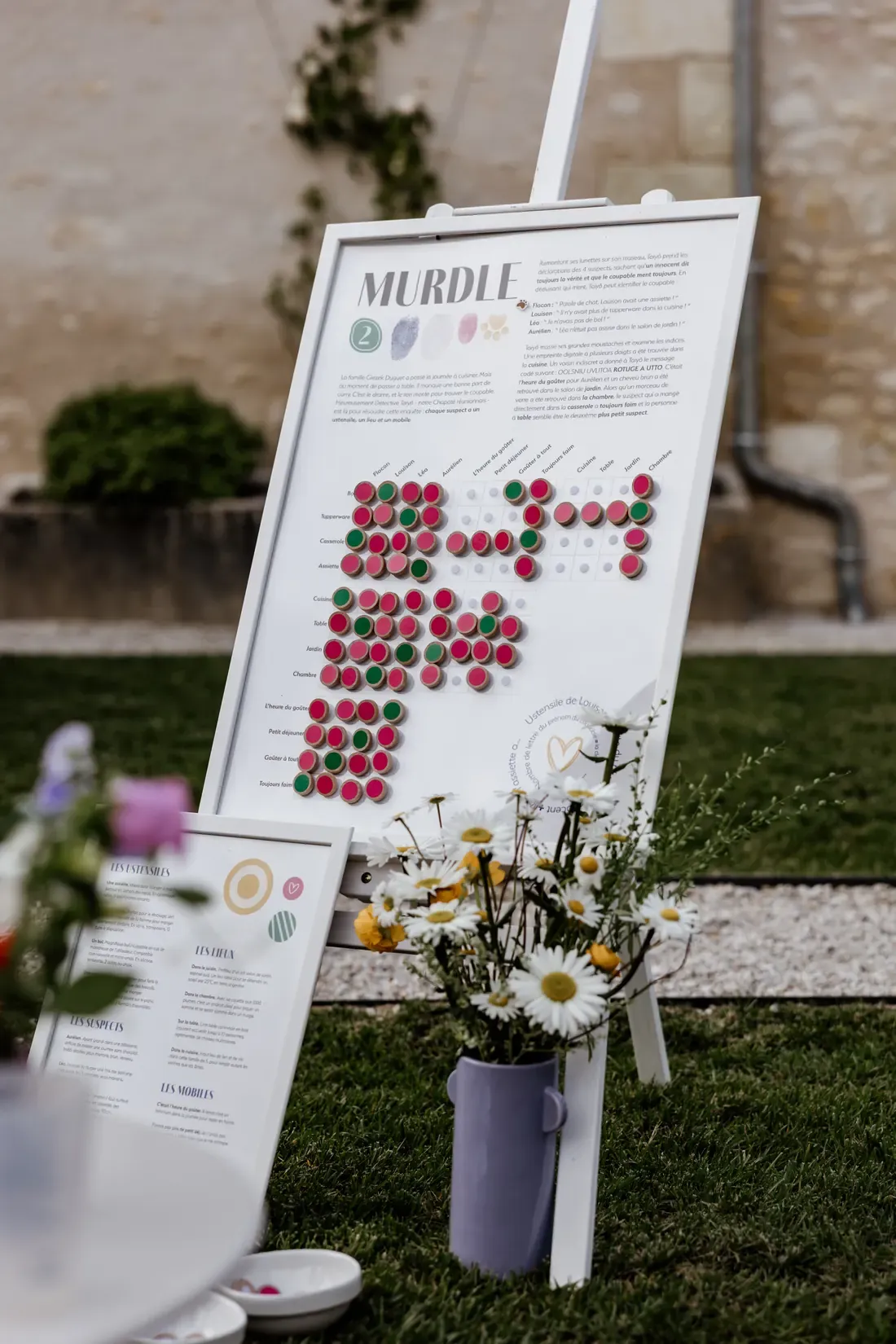
But here's what I love most about it: it only became itself once people played it. I designed the frame - tight, deliberate, engineered underneath - and the experience took its real shape in their hands, evolving as they moved through it, in ways no plan could fully script.
Shipped empty.
Finished by the people who played it.
Specified
Played
Specified
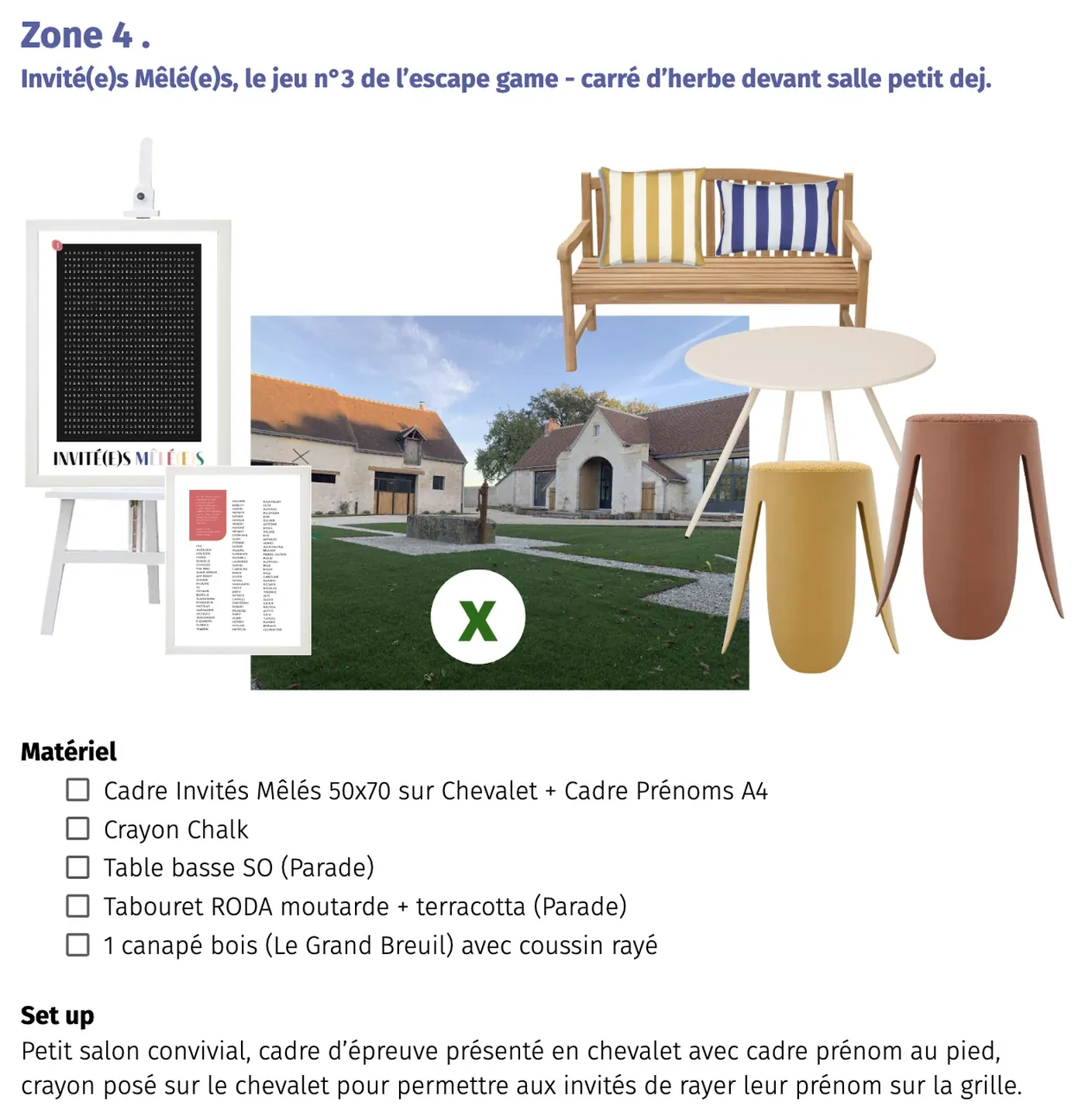
Played
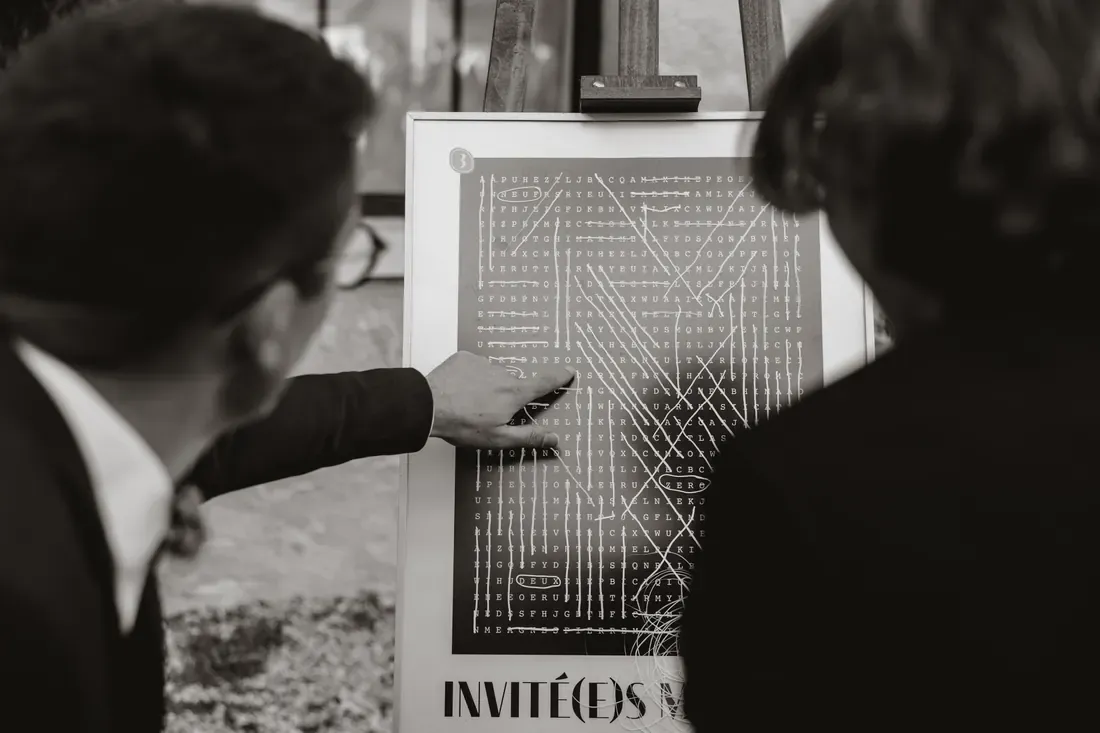
That's the whole truth about the systems I build: you design them for the people who'll use them, not for yourself - and they come alive the moment you let go. An escape game, a design system, a platform: same principle.
The frame is mine.
The life is theirs.
04 - Coordination
The part nobody sees.
Behind the identity and the staging: coordination. Florist, caterer, photographer, venue, rentals - a full ecosystem of suppliers, each with their own constraints, all pulling toward one coherent experience.
I wrote it all down. Zone by zone: what goes where, what it's made of, what it's for. A production guide precise enough to be executed without me in the room - then I handed the day itself to Hera & Harmonia (opens in a new tab), who ran it from the brief. One page per zone, one owner per page. That's the whole method.
Because the point was never to hold every thread myself. It was to build something clear enough that someone else could carry it, and to trust them to. On the day, the system held, and I got to be in the experience instead of running it.
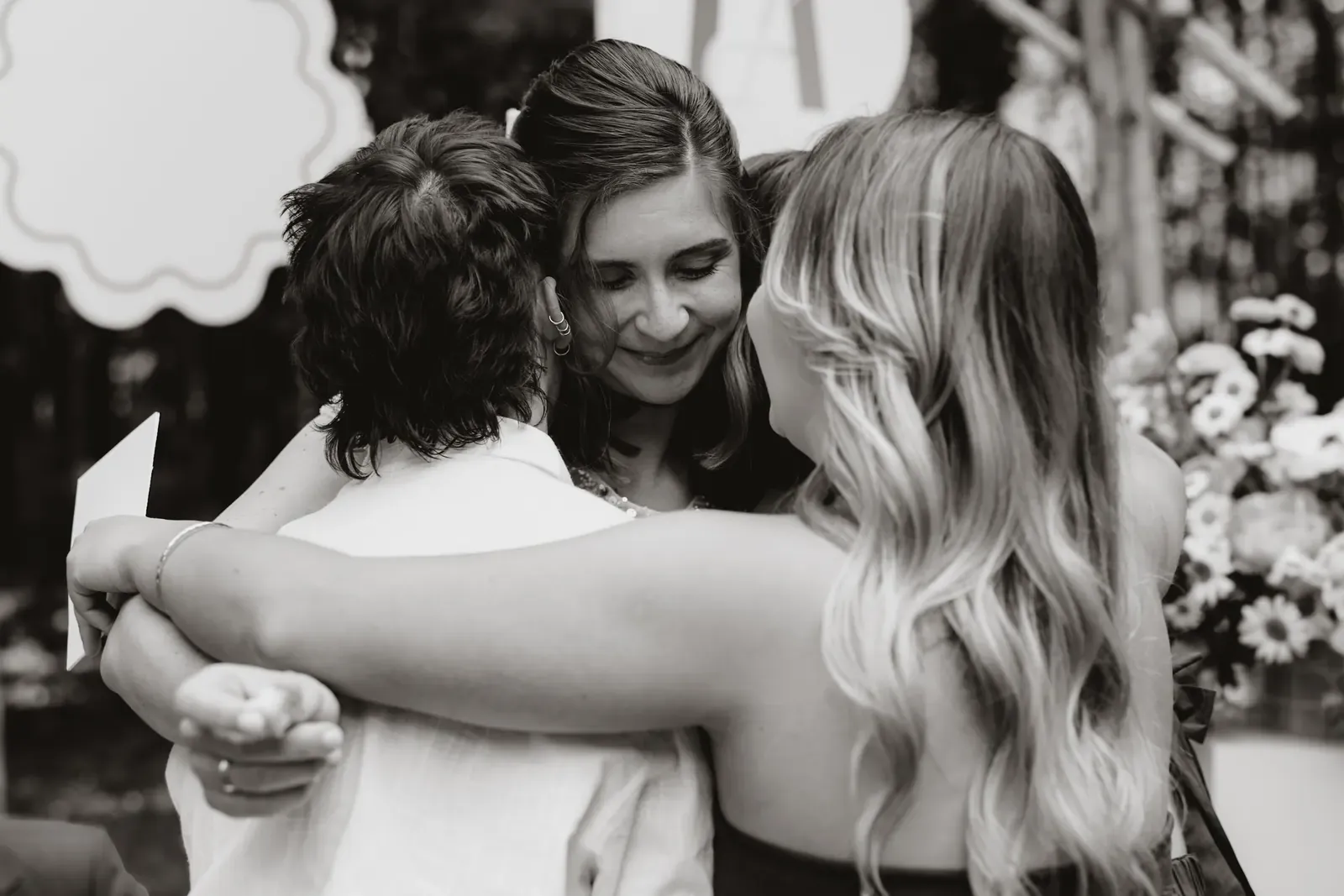
The same move as everything else I build: design the system, iterate with stakeholders, brief the owners, step back and collect the feedback. It works in a repo. It works in a garden.
I don't just repeat a system.
I version it.
This wasn't a one-off. It was the third edition - each one bigger than the last: a full identity every time, an escape game every time, the level raised at every turn. The pattern doesn't stop at the screen - and it doesn't stop at work either.
Credits
Vision and execution directed by me, but everything else was operated by people far better than me at their own craft.
- Artwork & event design
- Léa Giezek
- Photography
- Madeleine Photographe © (opens in a new tab)
- Day-of coordination
- Hera & Harmonia (opens in a new tab)
- Furniture
- Agence Parade (opens in a new tab)
- Floral design
- Les Nanas (opens in a new tab)
- Tableware & linen
- Maison Options (opens in a new tab)
- Cocktail bar
- Le Horse Bar (opens in a new tab)